Quick Answer: Ectoin is an amino-acid-derived molecule produced by bacteria that survive in extreme environments - deserts, salt lakes, arctic permafrost. Applied to skin, it forms a protective hydration shell around skin cells, shielding them from UV damage, pollution, and moisture loss. It is especially beneficial for perimenopausal and menopausal skin, which becomes more barrier-compromised and environmentally reactive as oestrogen declines.
Why "Ectoin Skincare" Searches Are Rising - and What Most Articles Miss
Searches for "ectoin skincare" have grown 86% in recent months. That's not a TikTok moment. It's the kind of sustained climb that happens when an ingredient crosses from clinical research into the awareness of ingredient-curious women who read labels before they buy.
And yet most brands still don't use it. Most articles that cover ectoin either skip the explanation entirely or reduce it to "it's a hydrator" — which is a bit like calling ceramides "moisturising." Technically not wrong, but it misses the point entirely.
This post covers what ectoin actually is, what the research says it does, why midlife skin benefits from it specifically, how it compares to hyaluronic acid, and why we built it into two Pure & Cimple formulations long before the trend arrived.
What Is Ectoin? The Science Behind the Molecule
Ectoin is a natural stress-protection compound - not primarily a hydration ingredient.
It is a small, amino-acid-derived molecule produced by extremophile bacteria: microorganisms that live in conditions that would kill almost any other living thing - salt lakes, sulphur springs, arctic permafrost, deserts. The reason these bacteria can survive those environments is ectoin.

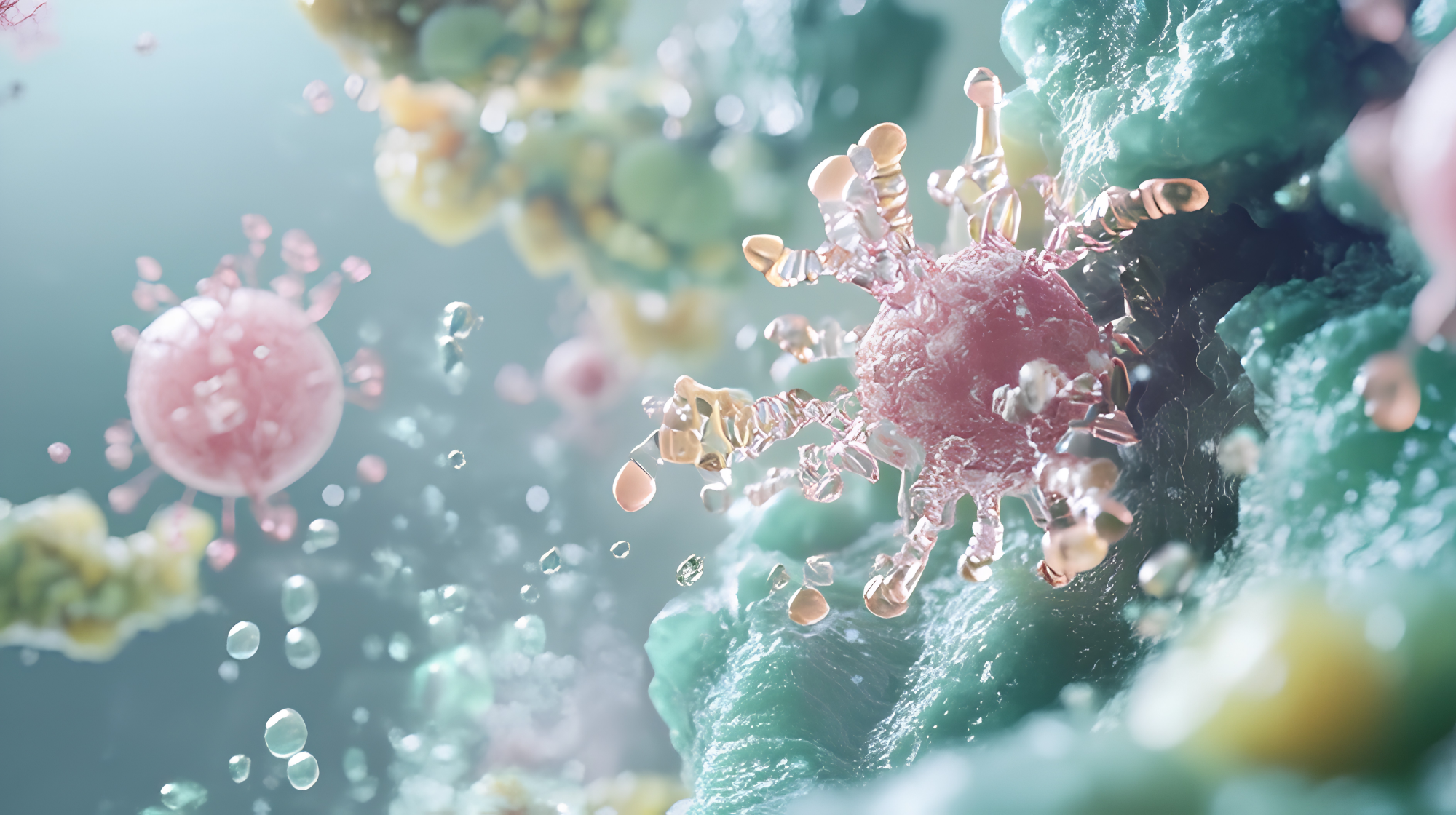
Inside their cells, ectoin forms a microscopic hydration shell around proteins and membranes, stabilising cellular structures against heat, cold, UV radiation, salinity, and oxidative stress. The microbe doesn't just survive — it functions normally. Ectoin acts as a cellular bodyguard.
When applied topically to human skin, ectoin does the same thing. It wraps skin cells in a protective hydration shell. It stabilises cell membranes. It reduces inflammation. And because it's an osmoprotectant - meaning it actively moves water into cells and holds it there - it delivers deep, lasting hydration without the evaporation problem that some humectants face in dry or heated air.
What Does Ectoin Do for Skin? The Clinical Evidence
Ectoin's benefits are backed by peer-reviewed research, not marketing claims. Here is what studies have demonstrated:
Ectoin protects against UV-induced skin damage. Specifically, it inhibits premature activation of matrix metalloproteinases (MMPs) — the enzymes that break down collagen when skin is exposed to UV. This is a meaningful anti-ageing mechanism, not just sun protection.

Ectoin reduces the skin's inflammatory response to pollution. Fine particulate matter from traffic, indoor cooking, and industrial sources is now recognised as a significant driver of visible skin ageing — accelerating pigmentation, barrier breakdown, and reactive skin conditions. Ectoin has been shown to reduce the inflammatory cascade triggered by these particles.
Ectoin strengthens the skin barrier and reduces trans-epidermal water loss (TEWL). TEWL is how efficiently the skin retains moisture. When TEWL is high, skin looks dull, feels tight, and dehydrates easily. Ectoin measurably improves this.
Ectoin's protective effects accumulate over time. Unlike many active ingredients that deliver a quick visible result then plateau, ectoin builds up in the skin with consistent use — meaning its protective capacity continues to strengthen between applications.
The key distinction: ectoin is a preventive and structural ingredient. It protects the skin's ability to keep functioning well over time. That is exactly what midlife skin needs.
Why Perimenopausal and Menopausal Skin Needs Ectoin More Than Younger Skin
This is the part most ectoin articles miss - and it's the reason ectoin is in our formulations, not just a newer hydration choice.
Midlife skin responds to the environment differently than it did a decade ago. Here's why, and where ectoin fits.
1. The skin barrier weakens during perimenopause
As oestrogen declines, ceramide production slows. Ceramides are the lipids that hold the skin barrier together — without sufficient ceramides, the outer layers of skin become less effective at keeping moisture in and environmental stressors out. Weather, pollution, temperature changes, and blue light exposure all penetrate more easily to the cellular level.
Ectoin reinforces what the barrier can no longer hold on its own.
2. Inflammatory reactivity increases with oestrogen loss
Oestrogen has a natural anti-inflammatory effect on skin. As it drops, skin becomes more prone to flushing, stinging, redness, and prolonged reactivity. Hot flushes compound this — they trigger vascular and inflammatory cascades that leave skin in a state of low-grade, chronic inflammation.
Ectoin's osmoprotective action calms this reactivity without the risks that come with some anti-inflammatory actives.
3. Cellular repair slows significantly after 45
The rate at which skin recovers from daily environmental damage — UV, free radicals, pollutants — drops as we age. Damage that a 32-year-old's skin resolves overnight accumulates as visible change in skin in its 50s: pigmentation, thinning, increased sensitivity, and loss of firmness.

It's not a coincidence that ectoin is most clinically studied in the context of mature and sensitive skin - it is, in effect, an ingredient formulated by biology specifically for when conditions become more demanding.
Ectoin vs Hyaluronic Acid: Which Is Better for Midlife Skin?
This is the most common question we receive. The short answer: they are different ingredients doing different jobs — and mature skin benefits from both.
Hyaluronic acid (HA) is a humectant. It draws water into the upper layers of the skin from the air and deeper tissues. It plumps. It smooths. It works well in humid conditions, and less well in dry, cold, or air-conditioned environments (where it can sometimes draw water from the skin rather than into it).
Ectoin is not primarily a hydration ingredient. It is a cellular protection ingredient that improves hydration as a secondary effect. It doesn't just put water into skin — it stabilises cells so they retain water more effectively, and shields them from the environmental stress that would otherwise break the barrier down in the first place.

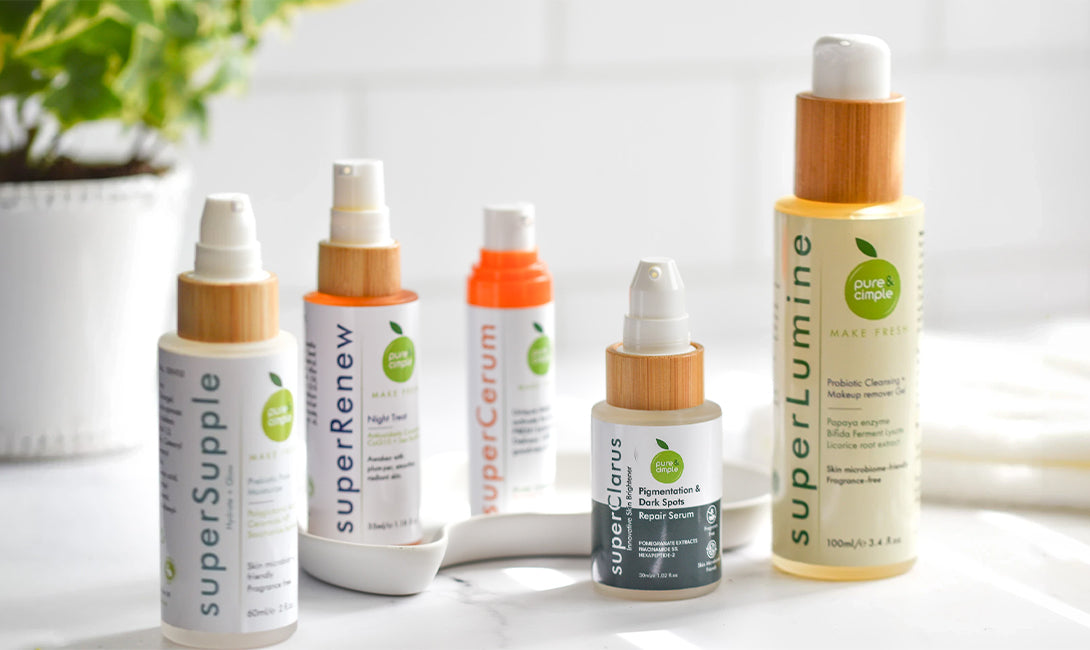
A complete midlife skincare routine addresses both layers of hydration: HA for immediate plumping, and ectoin for cellular-level protection and barrier stability. That's why superSupple combines ectoin, ceramides, and triple lipids in one formulation - hydration, barrier repair, and environmental defence, together.
How Pure & Cimple Uses Ectoin - and Why
We formulated ectoin into two products because midlife skin needs environmental protection at two different stages of the routine.

superSupple Barrier Repair Moisturiser
Ectoin works alongside ceramides, PGA, and triple lipids to build a daily barrier strong enough for modern environmental demands - city pollution, heated homes, air-conditioned offices, long-haul flights, temperature swings. This is your everyday cellular defence layer: the routine step that quietly prevents the slow accumulation of damage that shows up years later.

superPeptide GHK-Cu + HA Pro-collagen serum
Here, ectoin plays a different role. GHK-Cu (copper peptide) and hyaluronic acid in superPeptide work best when the cellular environment is stable. Ectoin provides that stability — it reduces the background inflammatory noise so that peptide signalling can be as effective as possible. The result is better collagen synthesis outcomes with less irritation risk.
Together, these two products create a routine designed not just for visible results today, but resilience across years. The slow, cumulative damage that thins skin, deepens pigmentation, and increases sensitivity? That's what a daily ectoin routine quietly prevents.
Who Should Use Ectoin Skincare?

Ectoin is especially beneficial for:
- Women in perimenopause and menopause — the barrier support and inflammatory calming are timed exactly to the biological changes occurring in midlife skin
- Women in urban environments — the particulate-matter defence is measurable and particularly relevant for city skin
- Frequent travellers and anyone in climate-controlled buildings — heated and air-conditioned spaces strip ambient humidity; ectoin's cellular hydration holds where surface humectants can't
- Women with reactive or sensitised skin — ectoin reduces inflammatory response without the irritation risk that comes with stronger actives
- Anyone building a long-term, preventive routine — ectoin is not a "see results in 7 days" ingredient; it is a quiet, structural, cumulative protector
Ectoin is safe to use morning and evening, during pregnancy and while breastfeeding, and is compatible with every other ingredient in a standard skincare routine — including vitamin C, retinol, bakuchiol, acids, and peptides.
The Bottom Line on Ectoin Skincare
Ectoin is not a trend dressed up as science. It is a well-studied, clinically validated ingredient that most of the skincare industry is catching up to - slowly. If you are in your 40s, 50s, or 60s and building a routine that needs to work as well ten years from now as it does today, ectoin belongs in it.
It protects against the kind of damage that doesn't show up immediately. It strengthens what midlife biology is weakening. And it does this gently, without compromising the barrier or triggering the reactivity that so many midlife women are already managing.
That's why it's in ours.
Frequently Asked Questions About Ectoin
What is ectoin and what does it do for skin?
Ectoin is an amino-acid-derived molecule originally produced by bacteria that survive in extreme environments. Applied to skin, it forms a protective hydration shell around skin cells, reducing damage from UV radiation, pollution, and moisture loss, while also calming inflammatory reactivity. It is both a protective and hydration-supporting ingredient.
Is ectoin better than hyaluronic acid?
They do different jobs. Hyaluronic acid pulls water into the skin's upper layers. Ectoin protects cells from the environmental stressors that deplete moisture and cause structural damage. Mature and sensitive skin benefits most from using both — ectoin for cellular protection, hyaluronic acid for visible plumping hydration.
Is ectoin good for sensitive or reactive skin?
Yes. Ectoin is one of the best-tolerated ingredients available for sensitive and reactive skin. It reduces inflammatory reactivity without the risks associated with actives, and supports the barrier — the root cause of most sensitivity. It is frequently used in formulations designed for eczema-prone and atopic skin.
How long does it take to see results from ectoin?
Hydration and comfort improvements are often noticeable within a few days. Barrier-strengthening and protective effects build over several weeks of consistent use. Ectoin's cumulative mechanism means the longer you use it, the greater the protective capacity in the skin.
Can I use ectoin with vitamin C, retinol, or bakuchiol?
Yes. Ectoin is non-reactive with other skincare actives and does not interfere with any standard ingredient. It actually supports tolerance of stronger actives by reducing background inflammation — many women find their retinol or bakuchiol routine becomes more comfortable once ectoin is in the routine.
Is ectoin safe during pregnancy and breastfeeding?
Yes. Ectoin is considered safe for use during pregnancy and while breastfeeding. It has no hormonal activity and is exceptionally well-tolerated.
Is ectoin vegan and sustainably sourced?
Yes. The ectoin in Pure & Cimple formulations is produced by controlled fermentation of microorganisms — no animal inputs, no habitat disruption, no extraction burden on natural environments.
Which Pure & Cimple products contain ectoin?
Ectoin is currently formulated into superSupple Prebiotic Barrier+ Moisturizer and the forthcoming superPeptide GHK-Cu + HA Pro-Collagen Serum. Together they deliver daily environmental protection and active collagen support.
Does ectoin have any side effects?
No known side effects have been identified in clinical research. Ectoin is among the most gentle and well-studied ingredients in modern skincare, with a safety profile that makes it suitable for all skin types, including reactive, sensitised, and post-procedure skin.