What’s the difference between topical and injectable GHK-Cu?
Topical GHK-Cu has decades of cosmetic use and human skin studies behind it. Injectable GHK-Cu has no published human studies on safety or effectiveness, and it is not an FDA-approved drug. For midlife skin, a well-formulated serum on a healthy barrier is the evidence-backed choice. A needle is not.
If your feed is full of copper peptide "pens" and vials, you're not imagining it. GHK-Cu has gone from a quiet serum ingredient to a wellness-clinic injectable in about a year. So let's separate what's proven from what's promised.
Why is everyone suddenly talking about GHK-Cu injections?
GHK-Cu is a copper-bound peptide your body already makes. Levels fall from about 200 ng/mL at age 20 to about 80 ng/mL by 60. That drop tracks with slower skin repair and the collagen loss that speeds up after menopause.
So the logic of "put it back" is appealing. Some wellness clinics and online sellers now offer it as an injection. In September 2026, NPR reported that the copper peptide trend has moved from creams to injections ahead of the science.
Does topical GHK-Cu actually work?
Yes, and it has the strongest evidence of the two options. Copper peptide creams and serums have been sold for decades and tested on people. A 2018 scientific review summarises the human skin studies:
- Collagen: after 12 weeks, GHK-Cu boosted collagen production in 70% of women tested. Vitamin C cream did so in 50% and retinoic acid in 40%.
- Face: 71 women used a GHK-Cu face cream for 12 weeks. Their skin became thicker and denser, with less sagging and fewer fine lines.
- Eyes: 41 women used a GHK-Cu eye cream for 12 weeks. It beat both a placebo and a vitamin K cream on lines and skin density.
These studies were small and mostly industry-funded, but they are real human skin studies. Mount Sinai dermatologist Dr. David Goldberg told NPR the topical science is solid.
Are GHK-Cu injections safe?
Nobody knows yet, and that's the honest answer. There are no published human studies showing injected GHK-Cu is safe or that it works. It is not an FDA-approved drug, and US compounding pharmacies are not currently allowed to make it for injection. An FDA advisory panel is due to review the evidence in February 2027.
What doctors are already reporting, per NPR:
- Unknown contents: vials bought online may hold the wrong dose, impurities or no copper peptide at all.
- Copper overload and liver strain: one Seattle-area doctor has seen patients with raised copper levels and liver problems after self-injecting.
- Injection-site trouble: irritation and infection.
- Stacking:
|
|
Topical serum |
Injection |
|
Human skin studies |
Yes, several |
None published |
|
FDA status |
Cosmetic ingredient |
Not an approved drug |
|
Main risk |
Mild irritation if overused |
Wrong product, copper overload, infection |
|
Who controls the dose |
Product formula |
Whoever filled the vial |
Wondering whether GHK-Cu suits your skin, or if you're on HRT? Read our guide: Who Can Use GHK-Cu, and Who Should Skip It.
You don't need a needle: the barrier-first way to use GHK-Cu
People say injections work better because GHK-Cu struggles to get through the skin. But your barrier decides how well any serum works. Repair the barrier, and your peptide has a healthy place to do its job.
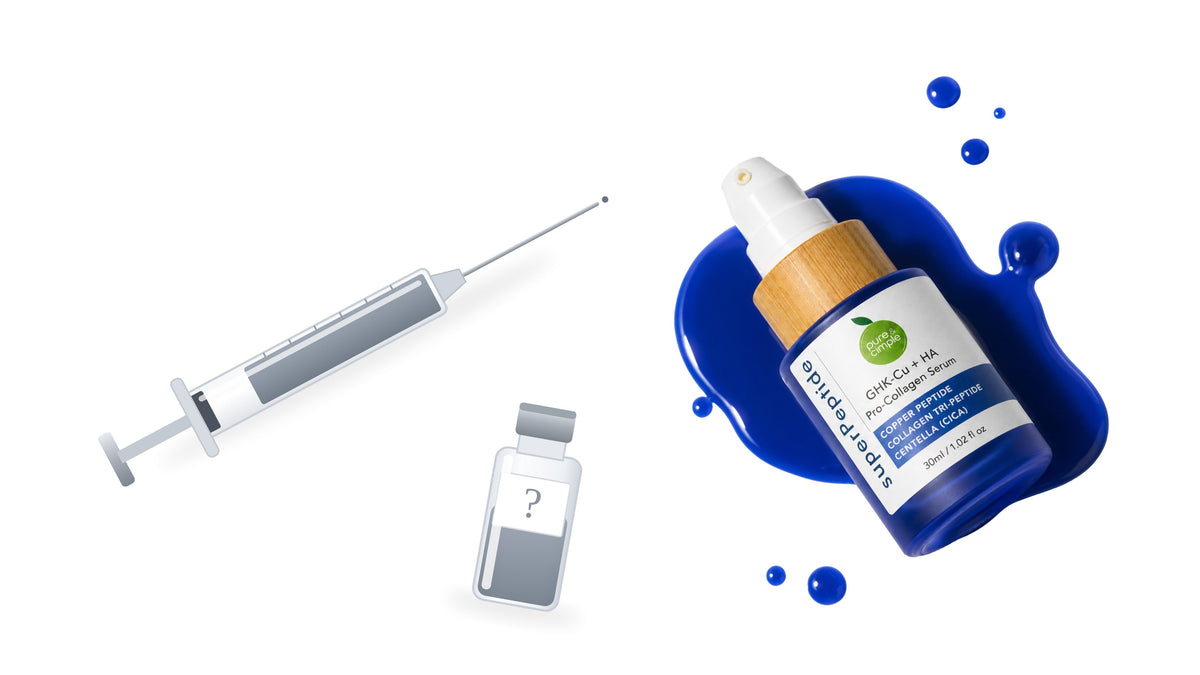
Here's a simple routine with superPeptide, our GHK-Cu serum. It also has collagen tripeptide, centella, bifida ferment lysate, niacinamide and hyaluronic acid:
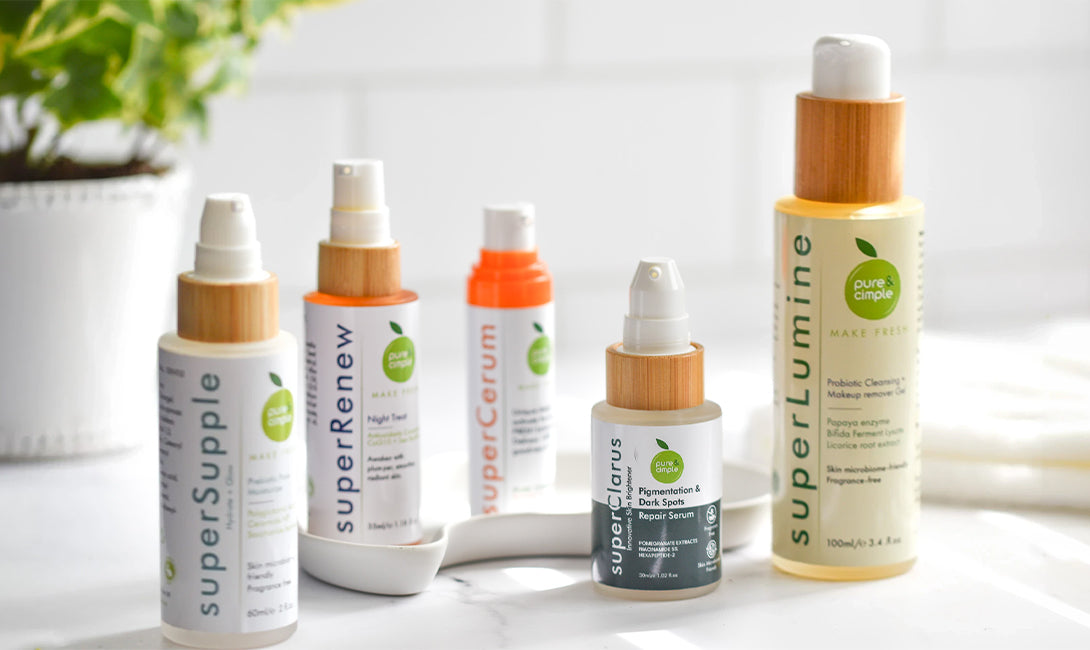
- Cleanse gently with superLumine. Skip harsh scrubs before a peptide.
- Apply superPeptide to dry skin, morning or evening.
- Seal it in with superSupple, whose ceramides rebuild the barrier.
- SPF every morning.
Start with 2 or 3 evenings in week one, use superCerum at the other end of the day, and give it 8 to 12 weeks. More in How to Use GHK-Cu Peptide and How Long Does GHK-Cu Take to Work?
Frequently asked questions
Is GHK-Cu safe to put on my face? For most people, yes. It has been used in skincare for decades and tested in human skin studies. Patch test first and start slowly if your skin is sensitive.
Are GHK-Cu injections better than serums? There's no proof that they are. No published human studies show injections are safe or effective for skin. Serums do have human data.
Is injectable GHK-Cu FDA approved? No. It is not an approved drug, and US compounding pharmacies are not currently allowed to make it for injection.
The bottom line
Your skin isn't failing. It's running low on a repair signal it used to make on its own. You don't need a needle to support it, just a proven serum on a healthy barrier, used patiently.
Ready to start? Shop superPeptide and pair it with superSupple for a barrier-first routine.
This article is for education only and isn't medical advice. Talk to your doctor before starting any injectable treatment.
Related reading: Why Collagen Loss Accelerates After 40 · Copper Peptides vs. Retinol · The Blue Revolution