If retinol made your skin “worse,” you’re not alone. And you’re not “bad at skincare” for reacting.
Here’s the truth I wish more people heard: most “retinol purges” are actually irritation or barrier stress… and you can usually tell by looking at just two things:
- Your cleanser (is it stripping?)
- Your moisturiser (is it actually barrier-supportive?)
This guide will help you:
- Tell purge vs barrier damage in under 2 minutes
- How to choose your cleanser & moisturizer to reduce retinol purge
- Reset your skin with a 7-day rescue plan
- Restart retinol safely, without repeating the same cycle
- FAQs
Purge or Barrier Damage? (2-minute checklist)
More likely a purge if:

- Breakouts look like small pimples/whiteheads (not rashy)
- They’re in your normal acne areas (chin/jaw/T-zone)
- Skin feels mostly normal otherwise (minimal sting/burn)
- It started within ~1–3 weeks of starting or increasing retinol
- Each blemish clears in a “normal acne” timeline
More likely barrier damage/irritation if:

- Your moisturizer (or even water) stings
- You feel burning, heat, tightness
- You have red patches, rawness, or “sandpapery” texture
- You’re flaking in a way that feels painful, not just dry
- It’s happening in new areas (cheeks, around nose/mouth/eyes)
- Suddenly everything feels sensitizing
- You’re breaking out and your skin feels inflamed/itchy
Biggest tell:
Purging is about clogs surfacing. Barrier damage is your skin saying: too much, too fast.
How to choose your cleanser + moisturizer to reduce retinol purge
Retinol overdrives skin renewal but it also makes skin more prone to dryness and sensitivity while you’re adjusting.
That’s why the “retinol problem” is often aggravated by the "routine problem"
- a cleanser that strips + retinol dryness = raw barrier
- a moisturizer that isn’t barrier-supportive + retinol = tight skin that never stabilizes
So if you want retinol to work long-term, the key isn’t adding more steps. It’s choosing the right cleanser and the right moisturizer.

The sneaky culprit: foaming cleansers
A lot of retinol reactions are made worse by cleansing. Foaming cleansers can become the tipping point during retinol adjustment:
- surfactants + hot water + retinol dryness = tight, squeaky, reactive skin
- and reactive skin makes everything sting (even “gentle” products)
What works while adjusting to retinol
- Non-foaming, creamy cleansers (low-lather, gentle)
- Cleansing oils or cleansing balms (especially at night for sunscreen/makeup)
- Short cleansing (20–30 seconds), lukewarm water
Simple rule: If your face feels tight right after cleansing, it’s too stripping for your current barrier.
The other half: your moisturizer should “build,” not just “coat”
When skin is irritated, a heavy cream can feel good temporarily - but long-term stability usually comes from a moisturizer that supports the barrier’s structure.
A helpful blueprint for a barrier-supportive moisturizer
Look for the “Barrier Trio”:
- Ceramides + Cholesterol + Fatty Acids (aka “triple lipids”)
And for comfort/steady hydration:
- Panthenol (comfort support)
- Ectoin (calm support for “overstimulated” skin)
- PGA (Polyglutamic Acid) (cushiony hydration)
- Saccharide Isomerate (long-wear hydration; helps “dry again in 2 hours” skin)
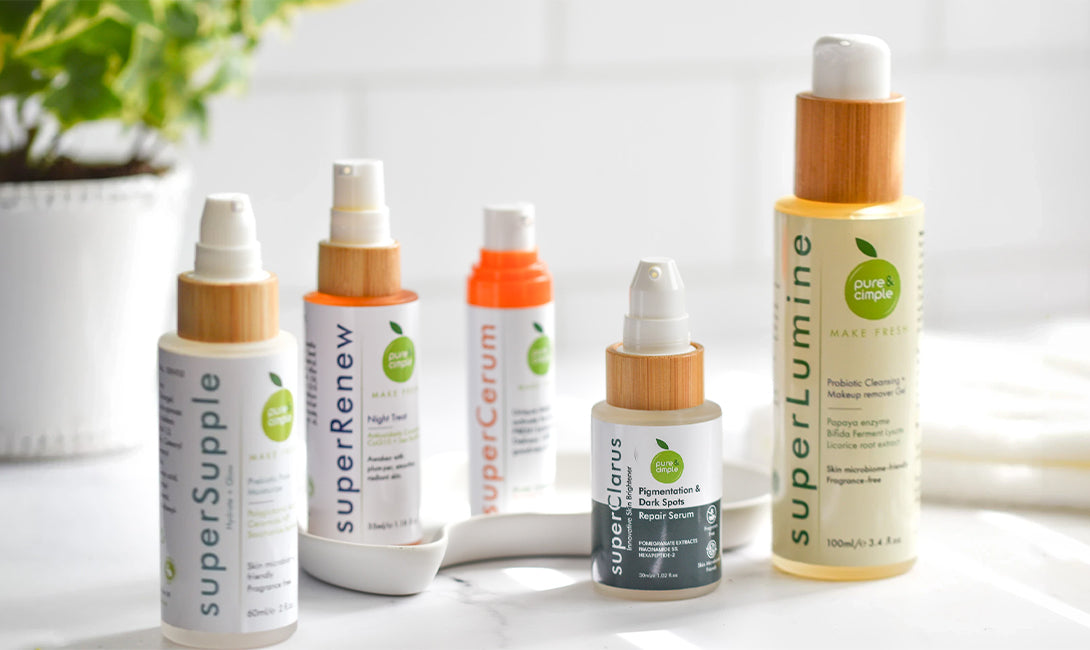
(This is the formulation logic behind superSupple—triple lipids + comfort + long-wear hydration—but you can use this checklist to evaluate any moisturizer.)
The 7-Day Rescue Plan (Cleanser + Moisturizer Focus)
Goal for 7 days: calm the skin + stop the cycle. This is intentionally boring. Boring is how you win.

The rescue rules (all 7 days)
- Stop retinol (and all exfoliating acids)
- No scrubs, no brushes, no peels
- Avoid hot water / long showers on the face
- Keep routines short: cleanser → moisturizer → sunscreen (AM)
Day-by-day (simple and realistic)
Days 1–2: Stop the fire
AM
- Rinse (or gentle non-foaming cleanse if needed)
- Barrier-supportive moisturizer
- Sunscreen
PM
- If wearing sunscreen/makeup: cleansing balm/oil
- Barrier-supportive moisturizer - apply while skin is slightly damp unless dampness stings (then apply to dry skin)
If you’re very tight: add a second thin layer of moisturizer 5–10 minutes later.
What you’re looking for: less sting, less heat, less “raw” feeling.
Days 3–4: Rebuild and seal
Same routine. No experimenting. If you’re flaking, don’t buff it off. Let it shed naturally.
If moisturizer stings:
- apply to fully dry skin
- cleanse less (PM only)
- use thin layers instead of one heavy layer
Days 5–7: Stabilize
If skin is calm (no burning, no new red patches):
- keep going
- only add a hydrating step if it’s something you already tolerate (no new actives)
If you’re still stinging by Day 7:
- extend rescue mode another week
- consider a dermatologist if symptoms are severe or worsening

How to restart retinol without relapsing
This is where most people accidentally undo all their progress.

Step 1: Wait for green lights. Restart only when:
- no burning or stinging
- redness is mostly gone
- cleansing + moisturizing feels comfortable
Step 2: Start slower than you think
- Weeks 1–2: 2 nights/week
- Weeks 3–4: 3 nights/week (only if comfortable)
- Then build gradually
Step 3: The sandwich method (most tolerated)

On retinol night:
- Moisturizer (thin layer)
- Retinol (pea-size for entire face)
- Moisturizer (thin layer)
Step 4: Don’t stack irritation
Choose one while adjusting: retinol OR exfoliating acids, not both.
Step 5: The cleanser rule that prevents most “retinol failure”
On retinol nights (and the day after), switch to:
- non-foaming cleansing
- lukewarm water
- short contact time
FAQs
Q: How long does retinol purging last?
A: If purging happens, it often shows up early (usually within the first few weeks) as existing micro-clogs surface. If symptoms are dominated by burning, tightness, or widespread redness, it’s more likely irritation than purging.
Q: Can retinol cause breakouts without purging?
A: Yes. Irritation can disrupt the barrier and trigger inflammation that looks like acne—especially if you increased frequency too fast or stacked other actives.
Q: What does barrier damage look like?
A: Common signs include stinging with products/water, redness, tightness, dryness that won’t quit, flaking, and sensitivity in areas you don’t normally break out.
Q: What cleanser should I use with retinol?
A: Most people tolerate non-foaming cleansers better while adjusting. At night, a cleansing balm/oil helps remove sunscreen/makeup without stripping.
Q: What moisturizer is best while using retinol?
A: Look for barrier support: ceramides + cholesterol + fatty acids, plus comfort ingredients like panthenol/ectoin and long-wear hydrators like PGA and saccharide isomerate.
If your skin is burning, tight, red, and reactive, that’s not a purge to power through - it’s your barrier asking for support. Do the boring 7-day reset where cleanser + moisturizer do the heavy lifting, then restart retinol slowly.