If your skin feels tight, dry, or easily irritated, you’re not alone. But how do you know if it’s just dry or sensitive skin—or something deeper, like a damaged skin barrier?
Understanding the difference can be the key to finally achieving calm, comfortable, resilient skin. In this guide, we’ll break down the telltale signs of barrier damage, how they differ from everyday dryness or sensitivity, and what to do if your barrier needs a reset.
First, What Is Your Skin Barrier?
Your skin barrier—also called the lipid barrier or moisture barrier—is your body’s frontline defense. It’s made up of skin cells held together by lipids (ceramides, cholesterol, fatty acids) and acts like a brick wall: keeping moisture in and irritants out.
When this barrier becomes compromised—due to harsh products, over-exfoliation, environmental stressors, or hormonal changes—your skin becomes vulnerable to inflammation, dehydration, and chronic irritation.
Why Barrier Damage Increases After 40
As we age, several factors make barrier damage more likely and more severe:
Hormonal Changes
Declining estrogen levels during perimenopause and menopause significantly impact skin barrier function:
Reduced ceramide production (the "mortar" between skin cells)
Decreased sebum production, leading to dryness
Thinner skin that's more easily damaged
Slower cell turnover, meaning damage takes longer to repair
Environmental Accumulated Damage
Years of sun exposure, pollution, and harsh skincare practices create cumulative effects that become more apparent in midlife.
Lifestyle Factors
Chronic stress, poor sleep, and dietary changes common during midlife transitions all impact skin barrier integrity.
Medication Effects
Hormonal treatments, blood pressure medications, and other common midlife prescriptions can affect skin hydration and barrier function.
Is My Skin
“Just Dry” or is it “Damaged”?
The difference between “just dry” and “damaged” is often in the intensity, persistence, and reactivity of your symptoms. Here’s what to look for:
How to Tell the Difference: The Key Questions
Ask yourself:
•Does my skin improve with simplified, gentle care?
→ If yes, likely just dry/sensitive. If not, barrier damage may be present.
•Do I need to reapply moisturizer constantly—and still feel dry?
→ Persistent dehydration is a strong sign of TEWL (transepidermal water loss) due to barrier breakdown.
•Does my skin sting or burn even with “safe” products?
→ This suggests deeper barrier dysfunction.
•Is my skin getting worse the more I try to fix it?
→ A common cycle when barrier support isn’t prioritized.
•A barrier-repair moisturizer with ceramides, fatty acids, and humectants like glycerin, panthenol, or polyglutamic acid
2. Avoid Harsh Ingredients
For now, SKIP:
•Retinoids
•AHAs/BHAs
•Scrubs
•Alcohol-based toners
•Hot water
SAY NO to
New skincare products or treatments
Professional treatments like facials or chemical peels
Face masks (especially clay-based or exfoliating types)
Anti-aging treatments with active ingredients
3. Give It Time
Skin barrier repair isn’t overnight. It takes consistent care over weeks to months for your skin to regain strength and resilience.
Key Ingredients to keep your Barrier Strong
Even after your skin barrier is restored, consistent care is essential. Prevention is always better than cure—when selecting products to maintain barrier health, prioritize those with scientifically proven ingredients like:
Final Thoughts
If your skin has become more reactive, more uncomfortable, and harder to soothe—don’t just pile on more products. That’s often the problem, not the solution. A healthy skin barrier is the foundation of great skin. Once it’s restored, everything else—hydration, glow, clarity—falls into place.
If you’re in your 40s or 50s and thinking: “Why is my skin suddenly so dry?”
“Why does everything sting now?”
“Why did my old moisturiser stop working?”
…that’s a real shift, and it’s common.
During perimenopause and menopause, skin often becomes drier and more reactive, which can make the barrier feel like it’s constantly “on edge.” In these phases, your skin does not need more actives - it need more resilience.
That’s where triple lipid barrier repair moisturisers come in (also called lipid replacement or barrier lipid therapy). The idea is simple:
Replenish the skin’s natural lipids in a balanced way so it can hold water, stay calm, and tolerate your routine again.
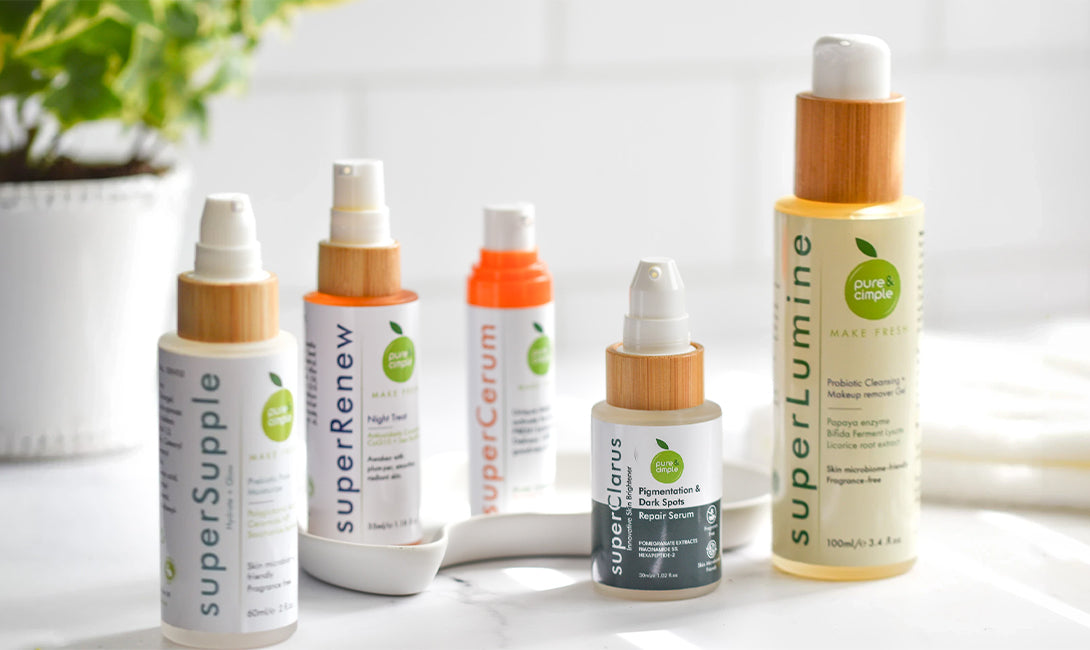
As formulators, this is the exact reason we built superSupple - not as a “results overnight” product, but as a daily barrier stabiliser. We’ll reference it as a real-world example (without turning this into a sales pitch), and you can use this guide to evaluate any product.
In a Hurry? Start Here… The 4 Things To Look For
If you’re in perimenopause/menopause and your skin is suddenly tight, flaky, stingy, or “reacting to everything,” you’re not doing anything wrong. Your skin is just asking for barrier support, not more actives
Here’s the simple checklist I’d use:
Step 1: Look for the “Barrier Trio” - Ceramides + Cholesterol + Fatty Acids (this is what “triple lipid” really means)
Step 2: Add hydration that lasts - If you’re stuck in the “moisturised… then dry again” loop, look for PGA (polyglutamic acid) + saccharide isomerate (they help hydration feel steadier on sensitive skin)
Step 3: Stop the daily triggers (for now) - Pause the stuff that keeps your barrier stressed: over-exfoliating, stacking actives, harsh cleansing, hot water, fragrance
Step 4: Keep your routine simple and consistent for 2 weeks
- Gentle cleanse → barrier moisturiser → SPF (AM)
- Gentle cleanse → barrier moisturiser (PM)
The Longer Story (Worth It)
Why perimenopause and menopause can make skin drier (and more sensitive)
Hormone shifts can change how skin behaves - especially its ability to:
retain moisture
feel comfortable day-to-day
reover after stress (actives, weather, cleansing, heat)
The result often looks like: tightness, flaking, redness, stinging, and “my skin can’t tolerate what it used to.” Even people who were oily for decades can become oily-but-dehydrated (surface dryness + uncomfortable shine).
This is why “barrier-first” becomes such a powerful strategy in midlife: when the barrier is supported, everything else becomes easier.
What is the skin barrier, really?
Think of the outermost layer like a brick wall:
Bricks = skin cells
Mortar = lipids (fats) that hold everything together
When the “mortar” is depleted or out of balance, water escapes and irritants get in. You may notice:
products stinging that never used to sting
dry patches that don’t respond to basic moisturisers
tightness after cleansing
redness or “flushy heat”
makeup sitting worse than usual
“moisturised for an hour → dry again”
The 3 barrier lipids (Triple Lipid) your skin actually uses
1) Ceramides - the “sealants”: Ceramides help reduce water loss and support the barrier’s structure.
Low-ceramide vibes: dryness that returns quickly, rough patches, sensitivity spikes
2) Cholesterol -the “organiser” : Cholesterol supports flexibility and repair - a barrier can’t function well if it’s brittle.
Low-cholesterol vibes: tightness, reactivity, “my skin can’t bounce back”
3) Free fatty acids -the “smoothers” : Fatty acids support barrier integrity and comfort, improving softness and resilience.
Low-fatty-acid vibes: flaking, dullness, uncomfortable dryness, rough texture
Here’s the simple but important distinction: Hydration fills the tank. Lipids fix the tank.
Many moisturisers hydrate well, but when midlife skin becomes sensitive, it often needs lipids to actually hold onto hydration and remain calm.
What’s with ratios like “2:4:2”?
You might see ratios describing the balance of ceramides : cholesterol : fatty acids.
The takeaway isn’t “hunt for a perfect ratio.” It’s:
Balance matters
Consistent tolerance matters more than chasing a trend
If your skin is reactive, the “best” triple lipid is the one you can use daily without stinging.
In midlife, “hydration style” matters as much as hydration amount
A big frustration in perimenopause/menopause dryness is that hydration can feel:
great for 30–60 minutes… then gone
or worse: “hydrating” products can sting because the barrier is stressed
That’s why we like pairing barrier lipids with long-wear hydration that feels steady.
PGA (Polyglutamic Acid) / Glycerine / Hyaluronic acid
A humectant that helps hold water at the surface and gives a cushiony comfort feel - especially when skin feels tight or sensitised.
Saccharide Isomerate (prebiotic-style hydrator)
A sugar-derived hydrator known for long-lasting moisture, helpful if you get the “dry again in two hours” cycle. It’s often positioned as microbiome-friendly and sustained release of hydrator keeping moisture in for 72 hours.
These don’t replace lipids - they support comfort while the barrier rebuilds.
What a “midlife barrier repair” formula looks like (example)
A lot of “barrier creams” rely mainly on heavy occlusion. That can feel soothing, but a midlife barrier-support formula often works best as a system:
Example (our approach in superSupple):
• A balanced tri-lipid system (ceramide + cholesterol + free fatty acids)
• Hydration supporters like glycerin + propanediol
• Panthenol for comfort support
• Ectoin for “overstimulated skin” phases
• PGA for cushiony water-holding feel
• Saccharide isomerate for long-wear hydration between applications
Why this matters: triple lipids help rebuild the “mortar,” while PGA + saccharide isomerate help midlife dryness feel less relentless day-to-day.
(Not a requirement to choose superSupple — use this as a blueprint for what to look for.)
Who benefits most from triple lipids in perimenopause/menopause?
You’re a strong candidate if:
• your skin became drier and more sensitive in your 40s/50s
• you get stinging from products you used to tolerate
• you reapply moisturiser constantly
• your skin feels raw after cleansing
• you’re using retinoids/exfoliants but can’t tolerate them anymore
• you feel stuck in “calm for a day → flare again”
The most common mistake: adding barrier products but keeping barrier stress
If you’re rebuilding sensitivity-prone midlife skin, you’ll usually do better by temporarily reducing:
• frequent exfoliation (AHA/BHA stacks)
• “active cocktails” in one routine (vit C + retinoid + acids)
• harsh cleansing, hot water, long cleansing routines
• fragranced products / essential oils
Barrier repair works best when skin isn’t being re-triggered daily.
A barrier-repair routine for perimenopause/menopause dryness (AM/PM)
Morning (steady + protective)
1. Gentle cleanse (or rinse if very dry)
2. Triple lipid moisturiser (thin layer)
3. Sunscreen
Night (repair-focused)
1. Gentle cleanse
2. Triple lipid moisturiser
3. Optional: add a simple oil on top if you’re very dry
If you’re using retinoids: Try the “sandwich”: moisturiser → retinoid → moisturiser, and lower frequency before increasing strength.
FAQs
Q: My skin is suddenly dry and reactive in perimenopause - what moisturizer should I use?
A: Perimenopause can make skin feel “suddenly” drier and more reactive because hormonal shifts can reduce natural oils and slow barrier recovery. The best place to start is a barrier-repair moisturizer that does two things:
Replaces missing skin lipids: look for ceramides + cholesterol + fatty acids (a “triple lipid” blend).
Limits irritation: choose fragrance-free, no essential oils, and no “tingly” actives if you’re sensitized.
If your skin is flaring, keep the routine boring for 2–3 weeks: a gentle cleanser, one barrier moisturizer, and daily sunscreen. Once your skin feels calm again, you can reintroduce actives slowly.
Quick rule: If your moisturizer stings on application, your barrier likely needs support first.
Q: How do I know if my skin barrier is "damaged vs just dry?”
A: Dry skin and a damaged barrier overlap, but there are tell-tale differences.
It might be “just dry” if:
Tightness improves quickly after moisturizer
You don’t get stinging/itching from basic products
Flaking is mild and predictable (like winter dryness)
It might be barrier-impaired if you notice:
Stinging/burning when applying products (even ones you’ve used before)
Redness, itchiness, or rashy patches
Skin feels dry again within hours, no matter what you apply
You’ve recently increased exfoliants/retinoids or over-cleansed
Makeup suddenly sits weird, pills, or highlights texture
Simple at-home test: Apply a plain, fragrance-free moisturizer to slightly damp skin. If it stings or your face feels “hot,” prioritize barrier repair before adding actives.
Q: What ingredients actually repair the barrier?
A: When we say “barrier repair,” we mean helping the outer layer of skin (stratum corneum) rebuild its protective structure—often described as “bricks and mortar.” The “mortar” is largely lipids, and the most important ones to replenish are:
Ceramides: help seal gaps and reduce water loss
Cholesterol: supports flexibility and barrier organization
Fatty acids: help complete the lipid matrix and strengthen barrier function
That’s why ceramides + cholesterol + fatty acids together is such a powerful combo (often called triple lipid support).
Other barrier-supportive helpers (especially for sensitive midlife skin):
Humectants (glycerin, propanediol, polyglutamic acid) to pull water into skin
Panthenol (pro-vitamin B5) to soothe and support recovery
Ectoin (often used to reduce stress/inflammation feeling in reactive skin)
Prebiotics (like saccharide isomerate) to support a balanced, comfortable skin environment
Q: What’s a good fragrance-free moisturizer for eczema-prone or very sensitive skin?
A: If you’re eczema-prone or extremely sensitive, aim for fragrance-free, barrier-first formulas and avoid common irritants.
Look for:
Fragrance-free (and no essential oils)
Triple-lipid support (ceramides + cholesterol + fatty acids)
Soothing, low-irritation ingredients (panthenol, ectoin, gentle humectants)
A texture that feels comforting—not “active” or tingly
Be cautious with:
Strong botanical fragrance components (lavender, citrus oils)
Overuse of exfoliants/retinoids during flares
Too many new products at once (introduce one at a time)
Pro tip: Patch test behind the ear or on the jawline for 2–3 nights, especially if your skin is currently reactive.
(And as always—if you have true eczema flares or broken skin, it’s worth checking in with a dermatologist.)
Q: How can I use tretinoin / retinol without irritation? What’s the sandwich method?
A: Barrier support is often the missing piece for people using tretinoin (or retinoids) who feel dry, irritated, or flaky.
The sandwich method is a simple way to reduce irritation:
Apply a thin layer of moisturizer on clean, dry skin
Apply a pea-sized amount of tretinoin (avoid corners of nose, mouth, and eyelids)
Finish with another thin layer of moisturizer
Two important details:
Start slow: 2–3 nights/week, then increase only if your skin is calm.
Wait until skin is dry before tretinoin if you’re sensitive—applying on damp skin can increase irritation.
If you’re still peeling or stinging: cut frequency, simplify everything else, and use a barrier-repair moisturizer daily until your skin feels steady again.
Q: How long does barrier repair take? What to avoid during a barrier “reset”?
A: Firstly AVOID strong exfoliating acids, harsh scrubs, high-fragrance products, and stacking too many actives at once to start barrier repair
You'll notice improvement
In 3–7 days: many people notice less tightness, less “sting,” and skin feels calmer if they stop irritants and simplify the routine.
In 2–4 weeks: flaking and rough texture often improve, and your skin holds moisture better.
In 4–8+ weeks: deeper resilience builds—skin is less reactive to products and environmental triggers.
Signs you’re healing: products sting less, redness reduces, makeup sits better, dryness doesn’t come back within a few hours.
Simple “barrier reset” for 2 weeks: gentle cleanser → barrier-repair moisturizer (AM/PM) → sunscreen (AM). Once your skin feels stable, reintroduce actives slowly (every 3rd night → every other night, etc.).
If you’re rebuilding your barrier, choose one triple lipid moisturiser and commit to it for a couple of weeks while you simplify everything else.
If you want a sanity check, write to us at welcome@pureandcimple.com with:
your top 3 symptoms (tightness? sting? flakes? heat?)
whether you’re using retinoids/exfoliants
your current AM/PM routine
We’ll suggest a simple barrier-first routine - even if that means using what you already own.
During menopause, skin loses up to 30% of its collagen in just 5 years. Peptides are the gentle, science-backed solution that stimulates collagen production without the irritation of retinol—perfect for sensitive, mature skin experiencing hormonal changes.
Navigating the world of skincare can often feel like solving a complex puzzle. Amidst the vast array of advice, how do you decipher what's truly beneficial for your skin? Join us as we clear the fog surrounding some of the most common skincare myths, empowering you with the knowledge to make informed skincare choices
Myth 1: The More Ingredients, the Better
Reality:
This "kitchen sink" approach to skincare is not only ineffective—it can be counterproductive, especially for sensitive, mature skin.
When products contain 30+ ingredients, you're exponentially increasing the risk of irritation and allergic reactions. Research shows that shorter ingredient lists with targeted, research-backed components deliver superior results with fewer side effects.
The Science: Dermatological research consistently shows that products with shorter, more focused ingredient lists are less likely to cause adverse reactions. The principle is simple: each additional ingredient represents a potential allergen or irritant, particularly for sensitive skin that becomes more reactive with age.
Smarter Choice: Look for products with focused, research-backed ingredients that address your specific concerns. Each ingredient should serve a clear purpose—hydration, barrier repair, or antioxidant protection—rather than being included for marketing appeal.
Myth 2: Natural and Organic Products are Always Safer
Reality:
While "natural" and "organic" sound appealing, these terms don't guarantee safety or effectiveness, especially for sensitive skin.
Poison ivy is natural. So are potent essential oils that can cause severe reactions. The skincare industry has weaponized these feel-good terms to create a health halo around products that may contain highly irritating botanical extracts.
The Science: Dermatological research consistently shows that some of the most common allergens in skincare are natural ingredients, including lavender oil, citrus extracts, and tree nut derivatives. Meanwhile, many synthetic ingredients are identical to compounds your skin naturally produces (biomimetic ingredients) and are often gentler and more stable.
Smarter Choice: Evaluate ingredients based on scientific evidence, not origin story. Look for biomimetic ingredients that work in harmony with your skin's natural processes, whether they're derived from plants or created in labs.
Myth 3: If a Product Burns, It’s Working
Reality:
Pain is not gain when it comes to skincare. Stinging, burning, or tingling sensations typically indicate irritation or barrier damage—the opposite of healthy skin function.
This dangerous myth has led countless women to endure uncomfortable reactions, thinking they're "activating" their products. In reality, they're compromising their skin barrier and potentially causing long-term sensitivity.
The Science: Research in dermatology journals shows that products causing immediate irritation often lead to chronic inflammation, which accelerates aging and can create permanent sensitivity issues. Healthy skin improvement should feel comfortable and soothing.
Smarter Choice: Choose products that feel comfortable upon application. Effective skincare should strengthen your skin barrier, not compromise it. If a product consistently causes discomfort, discontinue use immediately.
Myth 4: Higher Price Means Higher Quality
Reality:
Price often reflects marketing budgets, celebrity endorsements, and luxury packaging—not necessarily ingredient quality or formulation expertise.
Some of the most expensive skincare products contain the same basic ingredients as drugstore alternatives, just with prettier packaging and higher profit margins.
The Science: A comparative analysis in the International Journal of Cosmetic Science found no correlation between product price and clinical effectiveness. The study revealed that formulation quality, ingredient concentration, and delivery systems matter far more than cost.
Smarter Choice: Research ingredients and concentrations rather than focusing on price points. Look for transparent brands that provide detailed information about their formulations and clinical testing. Sometimes the most effective solution is also the most straightforward.
Myth 5: Makeup Wipes are the Best Way to Remove Makeup
Reality:
Makeup wipes are the skincare equivalent of using a dry paper towel to clean your kitchen—they move dirt around without actually removing it.
These convenient wipes typically contain harsh surfactants and preservatives that can disrupt your skin's microbiome and leave residue that clogs pores. They also require aggressive rubbing that can damage delicate facial skin.
The Science: Studies show that proper cleansing requires both time and the right pH balance to effectively remove impurities without disrupting the skin barrier. Makeup wipes fail on both counts, often leaving behind 30-40% of makeup and environmental pollutants.
Smarter Choice: Use a gentle, pH-balanced cleanser that effectively dissolves makeup and impurities. Oil-based cleansers or micellar waters followed by a gentle cream cleanser provide thorough cleansing without the harsh physical manipulation that wipes require.
Myth 6: You Absolutely Need a Toner
Reality:
If you're using a properly formulated cleanser, additional pH balancing is unnecessary—and some toners can actually disrupt your skin's natural balance.
This myth originated from an era when harsh, alkaline cleansers were the norm. Modern, well-formulated cleansers maintain your skin's natural pH without requiring a separate balancing step.
The Science: Healthy skin naturally maintains a pH of approximately 4.5-5.5. Research shows that disrupting this natural acidity with alkaline products can compromise the skin barrier and alter beneficial bacterial populations.
Smarter Choice: Choose a gentle, pH-balanced cleanser that doesn't require correction. If you enjoy the ritual of toning, opt for hydrating essences with beneficial ingredients like hyaluronic acid or niacinamide rather than harsh, alcohol-based toners.
Myth 7: You Don't Need Sunscreen on Cloudy Days
Reality:
UV rays penetrate clouds and windows, causing cumulative damage that accelerates aging and increases skin cancer risk—regardless of weather or location.
Up to 80% of UV rays can penetrate cloud cover, and UVA rays (the ones responsible for aging) easily pass through glass windows. For mature skin that's already more vulnerable to photodamage, this daily exposure adds up significantly.
The Science: The American Academy of Dermatology reports that incidental sun exposure (driving, sitting by windows, brief outdoor activities) accounts for significant lifetime UV damage. Studies show that daily sunscreen use can slow aging by up to 24%.
Smarter Choice: Make broad-spectrum SPF 30+ a non-negotiable part of your daily routine. Choose complementary products like Vitamin C to double the defense of SPF to reduce oxidative stress.
Myth 8: You Can Shrink Your Pores
Reality:
Pore size is genetically determined and cannot be permanently reduced. However, you can minimize their appearance and prevent them from becoming more noticeable.
This myth has spawned countless products promising "pore-shrinking" results that simply can't deliver on their claims. While you can't change your genetics, you can optimize how your pores look and function.
The Science: Pores are openings for hair follicles and sebaceous glands. Their size is determined by genetics, age, and sun damage. However, research shows that keeping them clean and maintaining skin elasticity can significantly improve their appearance.
Smarter Choice: Focus on ingredients that keep pores clear (like gentle fruit exfoliants) and maintain skin firmness (like peptides and antioxidants). Proper cleansing and sun protection prevent pores from appearing larger over time.
Myth 9: The Right Skincare Product Can Provide Immediate Results
Reality:
Sustainable skin improvement takes time—typically 4-12 weeks for most beneficial changes to become visible.
Our instant-gratification culture has created unrealistic expectations for skincare results. This myth leads people to abandon effective products too quickly or seek increasingly aggressive treatments that can damage skin long-term.
The Science: Skin cell turnover cycles take approximately 28 days in young adults and up to 84 days in mature skin. Collagen rebuilding, pigmentation fading, and barrier repair all require multiple cell cycles to show visible improvement.
Smarter Choice: Commit to consistent use of well-formulated products for at least 6-8 weeks before evaluating results. Track progress with photos taken in consistent lighting rather than relying on daily mirror assessments, which can be misleading.
Myth 10: Longer Skincare Routines with Multiple Steps are More Effective
Reality:
Elaborate 10+ step routines often create more problems than they solve, particularly for sensitive or mature skin that can become easily overwhelmed.
The skincare industry profits from complexity, convincing consumers that they need multiple products to address every conceivable concern. In reality, layering too many products can lead to irritation, pill formation, and ingredient interactions that reduce effectiveness.
The Science: Research in cosmetic chemistry shows that skin can only absorb a limited amount of product at one time. Layering multiple serums or treatments often leads to poor penetration and potential irritation from incompatible ingredients.
Smarter Choice:
Create a simple routine using 3-5 high-quality, multi-purpose products that target your main concerns. Prioritise consistency with effective formulations over complexity with questionable benefits.
The Truth About Effective Skincare
Effective skincare doesn't require complexity, expensive price tags, or uncomfortable experiences. It requires understanding your skin's needs and choosing products formulated with intention, backed by science, and designed to work in harmony with your skin's natural processes.
We encourage you to question marketing claims, research ingredients, and choose products that align with scientific evidence rather than trends. Your skin—and your wallet—will thank you.
What skincare myths have you encountered? Share your experiences with us, and let's continue debunking misinformation together.