
I remember the morning I noticed it. Standing at my bathroom mirror, the early light revealing what I'd been trying to ignore—my menopausal skin looked different. Not just older, but somehow... deflated.
If you're in perimenopause or menopause, you probably know exactly what I'm talking about. Your skin isn't just drier or showing more wrinkles. It's fundamentally changing, and your skincare routine for aging skin isn't working anymore.
Truth: You're not imagining it; these changes are real, measurable, and directly connected to declining estrogen levels. But here's the good news - peptides for mature skin offer a powerful solution.
Let me introduce you to peptides, the science-backed anti-aging ingredients that might just become your skin's new best friends during hormonal changes.
What Happens to Your Skin During Menopause

Within the first five years of menopause, your skin loses up to 30% of its collagen - the structural protein that keeps skin firm and plump. Before menopause, collagen loss was about 1% yearly (normal aging). But when estrogen levels drop? Collagen depletion accelerates dramatically.
Menopausal skin changes by the numbers:
- Skin thickness decreases by 1.13% per year after menopause
- Collagen content drops by 2.1% annually in the first 15 years post-menopause
- Sebum production decreases by up to 60%, causing severe dryness.
This collagen loss in menopause affects everything: wound healing, moisture retention, and how your aging skin responds to skincare products. Lower estrogen also increases inflammation—accelerating collagen breakdown and making mature skin more reactive and sensitive. sudden appearance of dark spots.
What Are Peptides and How Do They Work for Aging Skin?
Peptides are short chains of amino acids - the building blocks of proteins like collagen and elastin. When applied topically to mature skin, these anti-ageing peptides communicate directly with skin cells, signalling them to produce more collagen.
Unlike surface-level ingredients, peptides for skin actually trigger your body to create more of what it's losing naturally. Research shows peptides can increase collagen production by up to 350% in laboratory studies - making them one of the most effective anti-aging ingredients for menopausal skin.
This matters during hormonal changes because your skin isn't receiving the estrogen signals it once did. Peptides provide alternative communication pathways, helping mature skin function optimally despite declining hormones.
The 4 Types of Peptides for Menopausal Skin

1. Signal Peptides: Collagen-Boosting Peptides
Best for: Stimulating collagen production in ageing skin
Key ingredients: Palmitoyl Tripeptide-5, Palmitoyl Tripeptide-7, Matrixyl
Why menopausal skin needs them: They directly address rapid collagen loss. Most women notice firmer, smoother skin within 8-12 weeks of consistent use.
2. Carrier Peptides: Copper Peptides for Skin Repair
Best for: Multi-functional anti-ageing and skin repair
Key ingredient: Copper Peptides (GHK-Cu)
Why menopausal skin needs them: They stimulate collagen, improve elasticity, accelerate skin repair (which slows during menopause), and provide antioxidant protection against hormonal oxidative stress.
3. Neurotransmitter-Inhibiting Peptides: Expression Line Reducers
Best for: Reducing forehead lines and crow's feet
Key ingredients: Argireline (Acetyl Hexapeptide-8), SNAP-8
Why menopausal skin benefits: As aging skin loses elasticity, expression lines deepen. These peptides help prevent wrinkles from becoming more pronounced.
4. Enzyme-Inhibitor Peptides & Specialty Brightening Peptides
Best for: Protecting collagen and reducing age spots
Key ingredients: Soybean peptides (PGA - Polyglutamic Acid), Hexapeptide-2
What they do: PGA slows enzymes that break down collagen. Hexapeptide-2 is a specialty peptide for skin brightening that reduces dark spots and hyperpigmentation—common concerns during menopause when melanin production becomes irregular.
Peptides vs Retinol for Menopausal Skin: Which is Better?

Many women find retinol too harsh for menopausal skin. While retinol for aging skin can be effective, it often causes irritation, requires adjustment periods, and increases sun sensitivity—problematic for already vulnerable mature skin.
Why peptides are better for sensitive menopausal skin:
- Gentle enough for hormone-affected, sensitive skin
- No retinization period required
- No photosensitivity
- Can be used twice daily
- Target collagen production directly (the primary menopausal concern)
The best combination: Peptides + Vitamin C (in alternate routines) for ageing skin. Vitamin C provides antioxidant protection and brightening, while peptides stimulate collagen and elastin production.
How to Use Peptides in Your Anti-Ageing Skincare Routine
Morning Peptide Routine for Mature Skin:
- Gentle cleanser for sensitive skin
- Vitamin C serum (optional but recommended)
- Peptide serum
- Moisturiser with peptides
- Broad-spectrum SPF 30+ (essential for collagen protection)

Evening Peptide Routine for Menopausal Skin:
- Deep cleanse to remove makeup/sunscreen
- Peptide treatment on damp skin
- Night moisturizer with ceramides for barrier repair / Facial oil for extra nourishment.
Application tips for best results: Apply peptides to slightly damp skin for better penetration. Layer before heavy creams and oils. Use consistently—daily application provides continuous collagen-building signals to ageing skin cells.
Peptides 101: The Do's and Don'ts for Best Results
The Smart Combinations That Work
Peptides + Vitamin C: Dream team for collagen building and protection. Use vitamin C in the morning, peptides morning and night. NOT in the same routine.
Peptides + Niacinamide: Perfect pair for barrier support and collagen stimulation. No conflicts, all benefits.
Peptides + Hyaluronic Acid: Hydration meets structure. HA plumps with moisture while peptides build the collagen framework.
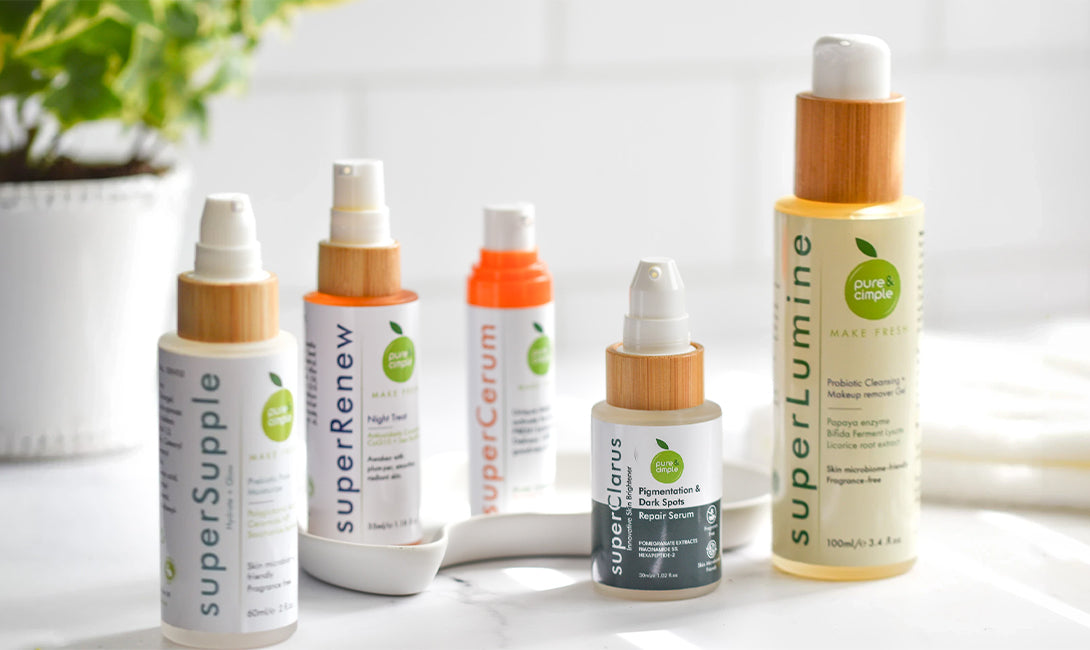
Peptides + Ceramides: Ideal for menopausal skin. Peptides build collagen, and ceramides repair the barrier. Our superSupple combines both for this exact reason.
Peptides + Bakuchiol: Gentle retinol alternative + collagen boosters = ageing skin's best friends. No irritation, all results.
The Tricky Combinations (Proceed with Caution)
Peptides + Retinol: Not impossible, but menopausal skin often can't handle both. If you insist, use retinol at night, peptides in the morning. Or better yet, choose peptides and skip the retinol drama.
Peptides + Strong Acids (High % AHA/BHA): Can work but timing matters. Apply acids first, wait 20-30 minutes, then apply peptides. Or use them on alternate days.
Steer clear of fragrances and essential oils — they can irritate thinning, mature skin and hinder the performance of peptides and other active ingredients.
Best Peptide Products for Women Over 40: Pure & Cimple Approach

superSupple Prebiotic Face Moisturizer: Multi-Peptide Moisturizer
Contains: Palmitoyl Tripeptide-5 (signal peptide for collagen production) + PGA/Polyglutamic Acid (enzyme-inhibitor peptide for collagen protection)
Benefits for menopausal skin:
- Stimulates new collagen while protecting existing collagen
- Superior hydration (PGA holds more water than hyaluronic acid)
- Ceramides strengthen the compromised skin barrier
- Prebiotics support the skin microbiome during hormonal changes

superClarus Innovative Skin Brightener: Peptide Brightening Treatment
Contains: Hexapeptide-2 (speciality brightening peptide)
Benefits for menopausal skin:
- Reduces dark spots and age spots
- Addresses hormonal hyperpigmentation
- Gentle for sensitive, reactive mature skin
- Works synergistically with other brightening ingredients
Our clean beauty philosophy: Fragrance-free, essential oil-free formulations without harsh preservatives—protecting sensitive menopausal skin from unnecessary irritation while delivering effective peptide concentrations.
Supporting Your Skin Beyond Topical Peptides
Nutrition for Collagen Production:
- Adequate protein intake (0.8-1.0g per kg body weight)
- Vitamin C supplementation (75-90mg daily—required for collagen synthesis)
- Collagen peptide supplements (2.5-10g daily show clinical benefits.)
- Antioxidant-rich foods (protect against collagen breakdown)
- Limit sugar and processed foods (accelerate glycation and collagen damage)

Lifestyle Factors for Healthy Ageing Skin:
- Quality sleep (7-9 hours for overnight skin repair)
- Stress management (cortisol breaks down collagen)
- Consistent hydration (supports skin moisture from within)
- Daily sun protection (protects collagen investment)
- Regular moderate exercise (improves skin circulation)
Frequently Asked Questions About Peptides for Menopausal Skin
Q: Can peptides replace Botox for ageing skin?
A: Peptides provide subtle, gradual wrinkle reduction without needles, but won't match injectable results. They're ideal for women seeking gentler anti-ageing solutions for sensitive menopausal skin.
Q: How long before I see results from peptide skincare?
A: Initial improvements in hydration and texture appear within 2-4 weeks. Visible wrinkle reduction and firmness improvements typically develop over 8-12 weeks. Maximum benefits occur at 3-6 months with consistent use.
Q: Are peptides safe for sensitive menopausal skin?
A: Yes. Peptides are among the gentlest anti-ageing ingredients, making them ideal for hormone-affected, sensitive skin. Unlike retinol, they don't irritate or increase sun sensitivity.
Q: Can I use peptides with other anti-ageing ingredients?
A: Absolutely. Peptides work synergistically with vitamin C, niacinamide, hyaluronic acid, and ceramides. They're compatible with most skincare ingredients and enhance overall anti-ageing results.
Q: What's the difference between collagen supplements and peptide skincare?
A: Collagen supplements support internal collagen production through nutrition. Topical peptides signal skin cells directly to produce collagen. Using both provides comprehensive collagen support during menopause.
Key Takeaways: Peptides for Menopausal Skin
- Menopause causes 30% collagen loss in the first 5 years
- Peptides stimulate collagen production up to 350%
- Multiple peptide types address different ageing concerns
- Gentler than retinol for sensitive menopausal skin
- Results are visible in 8-12 weeks, and maximise at 3-6 months
- Best combined with vitamin C, ceramides, and sun protection
- Pure & Cimple offers targeted multi-peptide solutions for mature skin
Have you tried peptides for menopausal skin? What results have you noticed? Share your experience below—your story helps other women navigating hormonal skin changes.