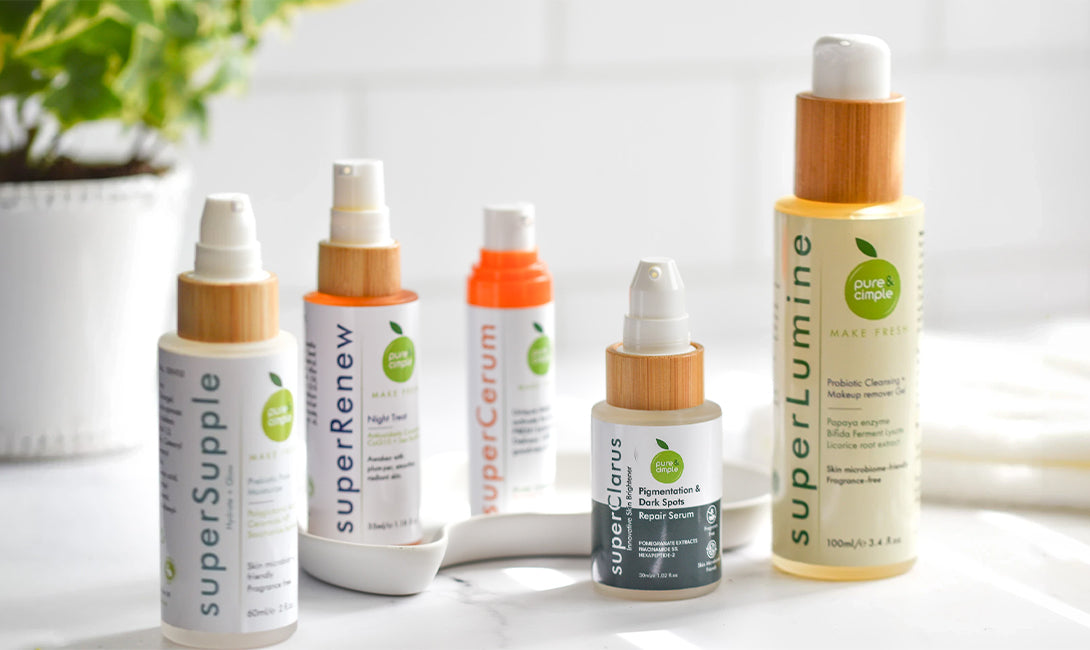
If your skin feels tight, dry, or easily irritated, you’re not alone. But how do you know if it’s just dry or sensitive skin—or something deeper, like a damaged skin barrier?
Understanding the difference can be the key to finally achieving calm, comfortable, resilient skin. In this guide, we’ll break down the telltale signs of barrier damage, how they differ from everyday dryness or sensitivity, and what to do if your barrier needs a reset.
First, What Is Your Skin Barrier?
Your skin barrier—also called the lipid barrier or moisture barrier—is your body’s frontline defense. It’s made up of skin cells held together by lipids (ceramides, cholesterol, fatty acids) and acts like a brick wall: keeping moisture in and irritants out.
When this barrier becomes compromised—due to harsh products, over-exfoliation, environmental stressors, or hormonal changes—your skin becomes vulnerable to inflammation, dehydration, and chronic irritation.
Why Barrier Damage Increases After 40
As we age, several factors make barrier damage more likely and more severe:
Hormonal Changes
Declining estrogen levels during perimenopause and menopause significantly impact skin barrier function:
Reduced ceramide production (the "mortar" between skin cells)
Decreased sebum production, leading to dryness
Thinner skin that's more easily damaged
Slower cell turnover, meaning damage takes longer to repair
Environmental Accumulated Damage
Years of sun exposure, pollution, and harsh skincare practices create cumulative effects that become more apparent in midlife.
Lifestyle Factors
Chronic stress, poor sleep, and dietary changes common during midlife transitions all impact skin barrier integrity.
Medication Effects
Hormonal treatments, blood pressure medications, and other common midlife prescriptions can affect skin hydration and barrier function.
Is My Skin
“Just Dry” or is it “Damaged”?
The difference between “just dry” and “damaged” is often in the intensity, persistence, and reactivity of your symptoms. Here’s what to look for:
How to Tell the Difference: The Key Questions
Ask yourself:
•Does my skin improve with simplified, gentle care?
→ If yes, likely just dry/sensitive. If not, barrier damage may be present.
•Do I need to reapply moisturizer constantly—and still feel dry?
→ Persistent dehydration is a strong sign of TEWL (transepidermal water loss) due to barrier breakdown.
•Does my skin sting or burn even with “safe” products?
→ This suggests deeper barrier dysfunction.
•Is my skin getting worse the more I try to fix it?
→ A common cycle when barrier support isn’t prioritized.
•A barrier-repair moisturizer with ceramides, fatty acids, and humectants like glycerin, panthenol, or polyglutamic acid
2. Avoid Harsh Ingredients
For now, SKIP:
•Retinoids
•AHAs/BHAs
•Scrubs
•Alcohol-based toners
•Hot water
SAY NO to
New skincare products or treatments
Professional treatments like facials or chemical peels
Face masks (especially clay-based or exfoliating types)
Anti-aging treatments with active ingredients
3. Give It Time
Skin barrier repair isn’t overnight. It takes consistent care over weeks to months for your skin to regain strength and resilience.
Key Ingredients to keep your Barrier Strong
Even after your skin barrier is restored, consistent care is essential. Prevention is always better than cure—when selecting products to maintain barrier health, prioritize those with scientifically proven ingredients like:
Final Thoughts
If your skin has become more reactive, more uncomfortable, and harder to soothe—don’t just pile on more products. That’s often the problem, not the solution. A healthy skin barrier is the foundation of great skin. Once it’s restored, everything else—hydration, glow, clarity—falls into place.
Collagen creams and peptide serums are not two versions of the same product. A collagen cream generally helps moisturize the skin and form a smoothing film on its surface. A peptide serum contains much smaller amino-acid chains selected for particular functions, including signaling and supporting the skin’s own collagen-production and remodeling processes.
In simple terms: topical collagen mainly helps moisturize and smooth the skin’s surface, while selected peptides can help signal and support your skin’s own process of producing and remodeling collagen. Peptides do not turn into collagen or insert new collagen into the skin; they support the skin’s own collagen-related activity.
That distinction matters, especially when you are choosing skincare for mature skin.
First, what is collagen?
Collagen is a large structural protein found throughout the body. In the skin, collagen fibers form an important part of the dermal support network that helps skin maintain its strength and firmness.
Over time, the amount, quality and organization of collagen in the skin change. Natural aging plays a role, as do years of ultraviolet exposure and other environmental stressors. These changes can contribute to thinner-feeling skin, reduced elasticity and more visible lines.
It is understandable to see the word collagen on a jar and assume the cream will put collagen back where it has been lost. But skin does not work quite that way.
Does collagen cream put collagen back into your skin?
No. Intact collagen is a very large molecule—far too large to pass readily through the stratum corneum, the skin’s outer protective layer. When collagen is applied in a conventional cosmetic cream, it does not travel into the dermis and become part of your existing collagen framework.
That does not make topical collagen useless. Collagen can attract and retain water, and it can form a light film over the skin. Those properties may help:
Reduce moisture loss from the surface
Make dry skin feel softer and more comfortable
Temporarily plump the look of fine dehydration lines
Create a smoother surface appearance
These are worthwhile moisturizing benefits.
They are simply different from rebuilding the collagen structure beneath the skin’s surface.
What about hydrolyzed collagen in skincare?
Hydrolyzed collagen has been broken into smaller fragments. This makes it easier to incorporate into a cosmetic formula and can improve its water-binding properties.
However, “smaller than intact collagen” does not automatically mean that every fragment reaches the deeper skin layers or stimulates new collagen. The size of the fragments, their structure, the delivery system and the rest of the formula all matter.
Hydrolyzed collagen can still be a useful humectant or film-forming ingredient. It should not be described as broken collagen that simply enters the skin and reconstructs itself.
What are peptides, and how are they different?
Peptides are short chains of amino acids. Collagen is also built from amino acids, but it is a large, complex protein. Think of collagen as a finished architectural cable and a peptide as a short sequence with a more targeted role.
Cosmetic peptides are chosen according to their structure and intended function. For example:
Signal peptides
help send messages associated with the skin’s extracellular matrix, including signals that support the skin’s own collagen synthesis and remodeling.
Carrier peptides
bind and carry trace elements. GHK-Cu, or Copper Tripeptide-1, binds copper and also has signaling activity associated with skin remodeling.
Neurotransmitter-inhibiting peptides are used to soften the appearance of expression-related lines, although they do not work like injectable treatments.
Enzyme-inhibiting peptides are studied for their influence on enzymes involved in various visible skin concerns.
Peptides do not all do the same thing, and simply adding the word “peptide” to a label does not guarantee a particular result.
Can peptide serums support collagen production?
Yes - selected peptides are used in skincare because they can support biological signals associated with collagen production and extracellular-matrix remodeling. Their small size is one reason they can behave differently from intact topical collagen.
A commonly cited principle in skin-delivery science is the “500-Dalton rule”: molecules below approximately 500 Daltons have a better chance of passing through the skin barrier than larger molecules. The specific GHK-Cu raw material used in Pure & Cimple superPeptide has a molecular weight of 401 Daltons, placing it below that commonly cited threshold. This number is specific to the GHK-Cu material used in our formula and should not be assumed for every GHK-Cu complex, blend or delivery form. Research using isolated human skin has also measured the penetration and retention of topically applied copper tripeptide.
Molecular weight is important, but it is not the only factor. A peptide’s stability, concentration, charge, affinity for water and oil, the formula’s pH and delivery vehicle, and the condition of the skin barrier all influence how it is delivered and how well it performs. This is why the complete serum matters—not only the presence of a peptide on the ingredient list.
GHK-Cu has been studied for its role in collagen-related signaling and skin remodeling, while Palmitoyl Tripeptide-5 is used as a signal peptide in pro-collagen skincare. In an appropriately designed formula, peptides such as these can support collagen-related skin processes and help improve the appearance of firmness, texture and fine lines. Results still depend on the specific peptide, formula and consistent use.
Collagen cream vs. peptide serum at a glance
Are peptides better than collagen cream for mature skin?
It depends on what your skin needs. “Better” is not a useful comparison unless the goal is clear.
If your skin feels dry, tight or rough, a well-formulated moisturizer may give you more immediate comfort than a treatment serum. A collagen cream can contribute moisturizing and smoothing benefits, although ingredients such as glycerin, ceramides, fatty acids and occlusives may be doing much of the barrier-supporting work in the complete formula.
If your priority is the appearance of firmness, texture or fine lines, a thoughtfully formulated peptide serum may offer more targeted support.
For many people in midlife, the most sensible answer is not one or the other. It is a targeted serum followed by a barrier-supporting moisturizer.
Can you use a peptide serum and collagen cream together?
Yes. In most cases, a peptide serum and collagen-containing moisturizer can be used in the same routine because they perform different jobs.
A simple routine would be:
Cleanse gently.
Apply the peptide serum according to its directions.
Follow with a moisturizer or collagen cream.
In the morning, finish with broad-spectrum sunscreen.
If your skin is sensitive, introduce one new formula at a time and patch-test first. Compatibility also depends on the complete formulas, not only the highlighted ingredients.
What should you look for in a peptide serum?
The ingredient list should identify the peptide rather than relying only on a vague “peptide complex” claim. It also helps when the brand explains why that peptide was selected and how to use the product.
For mature, sensitive skin, consider the surrounding formula too. Look for:
Humectants that attract water, such as glycerin or hyaluronic acid
Ingredients selected to support a comfortable skin barrier
A fragrance-free formula if fragrance is a trigger for you
Clear directions for layering with other active products
Realistic claims rather than promises of replacing lost collagen
Concentration can be useful information, but it is not a quality score on its own. A stable, well-balanced finished formula matters.
How Pure & Cimple superPeptide approaches the question
Pure & Cimple superPeptide is designed as a targeted peptide serum rather than a topical collagen cream.
It combines:
Copper Tripeptide-1 (GHK-Cu),
A copper-binding peptide with signaling activity associated with skin renewal and remodeling
Palmitoyl Tripeptide-5,
A signal peptide used in pro-collagen skincare
Glycerin and sodium hyaluronate,
Which help support hydration and create channel for GHK-Cu to go deeper in the dermis layer
Niacinamide, ectoin, Centella asiatica extract and bifida ferment lysate,
included in a formula designed with skin comfort and barrier support in mind
The serum does not need to contain collagen to support collagen-related skin activity. Its GHK-Cu and Palmitoyl Tripeptide-5 system is designed to support the skin’s own collagen-production and remodeling processes, helping improve the appearance of firmness, smoothness and resilience. Hydrating and soothing ingredients also help care for dry or sensitive-feeling skin.
For skin that needs more moisture, the serum can be followed with a barrier-supporting moisturizer.
The simple answer
A collagen cream and a peptide serum have different strengths.
Choose a collagen cream - or another well-formulated moisturizer - when your main goal is surface hydration, softness and temporary plumping. Choose a peptide serum when you want targeted ingredients that help support your skin’s own collagen-related processes and the appearance of firmness, texture and fine lines.
You do not need to choose between hydration and targeted care. Mature skin often benefits from both: a carefully formulated peptide serum followed by a moisturizer that helps the skin hold on to water and feel comfortable.
The important difference is that topical collagen mainly works as a moisturizing, surface-smoothing ingredient, while selected peptides support the skin’s own biological processes associated with collagen. The peptide does not become collagen; it helps encourage the skin’s own collagen-related activity.
Frequently asked questions
What is the difference between collagen and peptides in skincare?
Collagen is a large structural protein that mainly provides moisturizing and film-forming benefits when applied topically. Peptides are much shorter amino-acid chains selected for targeted functions. Certain peptides help signal and support the skin’s own collagen-production and remodeling processes, while carrier peptides such as GHK-Cu also bind copper.
Can collagen cream penetrate the skin?
Intact collagen is too large to penetrate readily through the skin’s outer barrier. It generally remains at the surface, where it can attract water and form a moisturizing film. Hydrolyzed collagen contains smaller fragments, but penetration and activity depend on their size and the finished formula.
Does collagen cream rebuild collagen?
No. Topical collagen does not enter the dermis and become part of the skin’s collagen framework. It can moisturize, smooth and temporarily plump the skin’s surface.
Are peptides better than collagen for wrinkles?
Selected peptides can support the skin’s own collagen-production and remodeling processes, making them more directly targeted to firmness and the appearance of fine lines. Results vary by peptide and formula. Collagen creams work differently and may temporarily soften dehydration lines by improving surface moisture.
Can I use collagen cream with a peptide serum?
Usually, yes. Apply the peptide serum first and follow with the cream or moisturizer. Always follow the directions for each product and introduce new formulas gradually if your skin is sensitive.
Is GHK-Cu collagen?
No. GHK-Cu is a short peptide bound to copper. It is generally listed as Copper Tripeptide-1 in skincare. It acts as a carrier peptide and also has signaling activity associated with skin remodeling.
Does a peptide serum contain collagen?
Not necessarily. A peptide serum does not need to contain collagen. Selected peptide chains can signal and support the skin’s own collagen-production and remodeling processes without becoming collagen themselves. Check the ingredient list for the exact peptides used.
Peptides are short chains of amino acids - the small building blocks that make up proteins such as collagen and elastin. In skincare, different peptides are added to formulas to help support functions associated with healthier-looking skin. Depending on the peptide and the complete formula, they may help skin look firmer, smoother, calmer or better hydrated.
That is the short answer. But if you have ever turned over a serum bottle and found names like Copper Tripeptide-1 or Palmitoyl Tripeptide-5, you may still wonder what those ingredients actually mean for your skin.
Let’s make peptides a little simpler.
What exactly is a peptide?
Think of amino acids as individual beads. When a small number of those beads join together, they form a peptide. Longer and more complex chains form proteins.
Our skin naturally contains proteins, including collagen and elastin, that contribute to its structure and resilience. With age, and through the cumulative effects of sun exposure and other environmental stressors, he skin’s collagen-rich support system changes. Skin may begin to feel drier and less resilient, while fine lines and changes in firmness become more visible.
Skincare peptides are not replacement collagen. They are small, targeted ingredients selected for the way they interact with the skin or support it's own collagen production.
What do peptides do for the skin?
Peptides do not all offer the same benefits. The word “peptides” covers a broad group of ingredients. Each one has its own structure and role in skincare.
Depending on the peptide, it may help to:
Support natural skin processes linked to collagen and elastin
Help skin look firmer and soften the appearance of fine lines
Help skin feel smoother and stronger
Carry minerals used in normal skin functions
Help skin look calmer and feel more comfortable
Work well with hydrating and barrier-supporting ingredients
It is important to be clear about these benefits. A peptide serum is a cosmetic product, not a medical treatment. Results depend on the exact peptide, the full formula and how often you use it. Seeing “peptide” on a label does not guarantee a certain result.
Types of peptides in skincare
Peptides are often described as “messengers.” That is a helpful starting point, but it is not the whole story.
Some peptides are designed to act as signals associated with the skin’s support matrix. Some bind to and carry a mineral. Others are studied for their effect on processes related to visible expression lines or skin comfort.
Researchers commonly group cosmetic peptides according to these proposed functions:
1. Signal peptides
Signal peptides are used to support processes connected with proteins in the skin’s extracellular matrix - the framework surrounding skin cells. They are often found in products intended to improve the look of firmness, texture and fine lines.
Palmitoyl Tripeptide-5, for example, is a signal peptide used in firming and pro-collagen skincare formulas. The word “palmitoyl” indicates that a fatty component has been attached to the peptide. This can improve compatibility with the skin and help address one of the challenges of formulating with water-loving peptide molecules.
GHK-Cu also has signaling activity associated with skin remodeling. Although it is usually placed in the carrier-peptide category because it binds copper, research suggests that its role is not limited to transporting a mineral. This overlap is a useful reminder that peptide categories describe their main functions, but they are not always rigid boxes.
2. Carrier peptides
Carrier peptides bind and transport trace elements. The best-known skincare example is GHK-Cu, listed on an ingredient label as Copper Tripeptide-1. GHK-Cu is often described as a dual-function peptide: it binds and delivers copper while also participating in biological signaling associated with skin renewal and extracellular-matrix remodeling.
GHK is a naturally occurring three-amino-acid peptide with an affinity for copper. In a cosmetic serum, GHK-Cu is used to support skin renewal and the appearance of firmer, smoother, healthier-looking skin. Its natural copper complex also gives properly formulated products a characteristic blue color.
We will explore this particular peptide in the next article in this series: What Does GHK-Cu Do?
3. Neurotransmitter-inhibiting peptides
These peptides are used in products that target the appearance of expression lines. They are sometimes casually described as “Botox-like,” but that comparison can be misleading. A topical cosmetic does not work in the same way or produce the same result as an injectable prescription treatment.
It is more accurate to say that this category is designed to soften the look of lines associated with repeated facial movement.
4. Enzyme-inhibiting peptides
This broad category includes peptides studied for their ability to influence enzyme activity associated with visible skin aging or uneven-looking skin. Their functions vary, so the individual peptide and the evidence behind it matter more than the category name alone.
Are peptides good for aging skin?
Peptides can be a thoughtful addition to a mature-skin routine, especially when firmness is only one part of the concern.
In midlife, skin often does not simply look different - it may behave differently. It can feel drier, become more reactive and take longer to feel comfortable after irritation. A very aggressive routine can make those concerns harder to manage.
Peptide formulas are appealing because they can be paired with ingredients that support hydration and the skin barrier. Rather than focusing only on exfoliating the surface, a well-designed peptide serum can take a more supportive approach to the appearance of firmness, texture and resilience.
Peptides do not replace daily sunscreen, adequate moisturization or professional care for a skin condition. They work best as one part of a consistent routine.
Are peptides suitable for sensitive skin?
Many people with sensitive skin can use peptides, but “contains peptides” does not automatically mean “suitable for sensitive skin.” The complete ingredient list matters.
When assessing a peptide serum, look beyond the headline active and consider:
Whether it contains fragrance or essential oils
Whether it includes hydrating ingredients such as glycerin or hyaluronic acid
Whether the formula contains barrier-supporting or soothing ingredients
How many strong actives you are already using
Whether the brand explains the peptide identity and directions clearly
Patch-test a new product before applying it across your face, particularly if your skin is reactive. Introduce one new product at a time so you can understand how your skin responds.
We will cover this in detail later in the series: How to Choose a Peptide Serum for Sensitive Skin.
How can you recognize peptides on an ingredient list?
Peptide ingredient names often contain words such as dipeptide, tripeptide, tetrapeptide, pentapeptide or hexapeptide. The prefix refers to the number of amino acids in the chain.
These ingredients are not interchangeable. Finding one peptide in a formula does not tell you that it offers the benefits associated with every other peptide.
Does a higher peptide percentage always mean better results?
No. Percentages can be difficult to compare because brands may describe either the concentration of a pure peptide or the concentration of a supplier blend that contains the peptide.
Two products both advertised as “1% peptide” may therefore contain very different amounts of the peptide itself. Stability, pH, supporting ingredients, packaging and consistent use also affect the finished product experience.
Transparency is more useful than a dramatic number. Look for a brand that identifies the peptide, explains the form or concentration accurately and gives realistic directions and expectations.
A closer look at Pure & Cimple superPeptide
Pure & Cimple superPeptide combines two complementary peptide types:
Copper Tripeptide-1 (GHK-Cu) - Clinical-grade signaling peptide that triggers natural skin remodeling for a firmer, denser look.
Palmitoyl Tripeptide-5 - A targeted "builder" peptide that mimics the body’s mechanism to boost collagen synthesis.
The formula pairs them with glycerin and niacinamide along with
Ectoin - Reinforces your skin's natural defenses and calms surface redness
Centella asiatica extract - A botanical healer that calms redness and ensures high-potency actives work without irritation.
Bifida ferment lysate - "Microbiome Shield" that protects cells from environmental stress and strengthens the skin barrier.
Multi-molecular HA - Provides intense, multi-layer hydration for an immediate plumping effect and it creates a channel for GHK-Cu to go deeper where it can work efficiently.
superPeptide is fragrance-free and contains no added dye. Its sapphire-blue color comes from the copper peptide complex itself.
What results should you expect from a peptide serum?
Peptide skincare is better suited to consistency than instant transformation. A hydrating formula may make skin feel more comfortable or look temporarily plumper relatively quickly. Changes in the appearance of texture, firmness or fine lines generally require regular use over a longer period.
Results vary with the peptide, formula, your skin, the rest of your routine and how consistently you use the product. That is why it is wise to be cautious with universal promises or exact timelines.
Take a photo in the same lighting before beginning a new serum, then compare at sensible intervals rather than inspecting your skin every morning. We will look more closely at realistic timing in How Long Does GHK-Cu Take to Work?
The simple takeaway
Peptides are short chains of amino acids used in skincare for different targeted purposes. Some act as signals, some carry minerals, and others are included to address the appearance of expression lines or support skin comfort.
For mature or sensitive skin, the best peptide serum is not simply the one with the longest ingredient list or loudest percentage claim. Look for an identified peptide, a thoughtfully designed formula, supportive ingredients and directions you can follow consistently.
Peptides are not magic, and they do not all work in the same way. But in the right formula, they can be a useful part of a gentle, barrier-conscious routine for skin that looks smoother, firmer and more resilient.
Frequently asked questions
What are peptides in skincare?
Peptides are short chains of amino acids used in skincare to support specific cosmetic benefits. Depending on the peptide, they may help improve the appearance of firmness, texture, fine lines or skin comfort.
What is the difference between peptides and collagen?
Collagen is a large structural protein found naturally in the skin. Peptides are much shorter chains of amino acids. Topical peptides do not simply replace lost collagen; certain peptides are used to support skin processes associated with a firmer or smoother appearance.
Can I use a peptide serum every day?
Many peptide serums are designed for daily use, but follow the directions for the specific formula. If your skin is sensitive, patch-test first and introduce the serum gradually.
Are peptides suitable for mature skin?
Yes, peptides can suit mature skin because different types are used to support the appearance of firmness, texture and resilience. A formula that also provides hydration and barrier support may be especially helpful when mature skin feels dry or sensitive.
Are all peptide serums the same?
No. Different peptides have different functions, and products vary in concentration, formulation, pH, stability and supporting ingredients. Evaluate the full formula rather than assuming every peptide product offers the same benefits.
Is GHK-Cu a peptide?
Yes. GHK-Cu is a three-amino-acid peptide bound to copper. On cosmetic ingredient lists, it is generally named Copper Tripeptide-1. It belongs to the carrier-peptide category.
Quick Answer: Ectoin is an amino-acid-derived molecule produced by bacteria that survive in extreme environments - deserts, salt lakes, arctic permafrost. Applied to skin, it forms a protective hydration shell around skin cells, shielding them from UV damage, pollution, and moisture loss. It is especially beneficial for perimenopausal and menopausal skin, which becomes more barrier-compromised and environmentally reactive as oestrogen declines.
Why "Ectoin Skincare" Searches Are Rising - and What Most Articles Miss
Searches for "ectoin skincare" have grown 86% in recent months. That's not a TikTok moment. It's the kind of sustained climb that happens when an ingredient crosses from clinical research into the awareness of ingredient-curious women who read labels before they buy.
And yet most brands still don't use it. Most articles that cover ectoin either skip the explanation entirely or reduce it to "it's a hydrator" — which is a bit like calling ceramides "moisturising." Technically not wrong, but it misses the point entirely.
This post covers what ectoin actually is, what the research says it does, why midlife skin benefits from it specifically, how it compares to hyaluronic acid, and why we built it into two Pure & Cimple formulations long before the trend arrived.
What Is Ectoin? The Science Behind the Molecule
Ectoin is a natural stress-protection compound - not primarily a hydration ingredient.
It is a small, amino-acid-derived molecule produced by extremophile bacteria: microorganisms that live in conditions that would kill almost any other living thing - salt lakes, sulphur springs, arctic permafrost, deserts. The reason these bacteria can survive those environments is ectoin.
Inside their cells, ectoin forms a microscopic hydration shell around proteins and membranes, stabilising cellular structures against heat, cold, UV radiation, salinity, and oxidative stress. The microbe doesn't just survive — it functions normally. Ectoin acts as a cellular bodyguard.
When applied topically to human skin, ectoin does the same thing. It wraps skin cells in a protective hydration shell. It stabilises cell membranes. It reduces inflammation. And because it's an osmoprotectant - meaning it actively moves water into cells and holds it there - it delivers deep, lasting hydration without the evaporation problem that some humectants face in dry or heated air.
What Does Ectoin Do for Skin? The Clinical Evidence
Ectoin's benefits are backed by peer-reviewed research, not marketing claims. Here is what studies have demonstrated:
Ectoin protects against UV-induced skin damage. Specifically, it inhibits premature activation of matrix metalloproteinases (MMPs) — the enzymes that break down collagen when skin is exposed to UV. This is a meaningful anti-ageing mechanism, not just sun protection.
Ectoin reduces the skin's inflammatory response to pollution. Fine particulate matter from traffic, indoor cooking, and industrial sources is now recognised as a significant driver of visible skin ageing — accelerating pigmentation, barrier breakdown, and reactive skin conditions. Ectoin has been shown to reduce the inflammatory cascade triggered by these particles.
Ectoin strengthens the skin barrier and reduces trans-epidermal water loss (TEWL). TEWL is how efficiently the skin retains moisture. When TEWL is high, skin looks dull, feels tight, and dehydrates easily. Ectoin measurably improves this.
Ectoin's protective effects accumulate over time. Unlike many active ingredients that deliver a quick visible result then plateau, ectoin builds up in the skin with consistent use — meaning its protective capacity continues to strengthen between applications.
The key distinction: ectoin is a preventive and structural ingredient. It protects the skin's ability to keep functioning well over time. That is exactly what midlife skin needs.
Why Perimenopausal and Menopausal Skin Needs Ectoin More Than Younger Skin
This is the part most ectoin articles miss - and it's the reason ectoin is in our formulations, not just a newer hydration choice.
Midlife skin responds to the environment differently than it did a decade ago. Here's why, and where ectoin fits.
1. The skin barrier weakens during perimenopause
As oestrogen declines, ceramide production slows. Ceramides are the lipids that hold the skin barrier together — without sufficient ceramides, the outer layers of skin become less effective at keeping moisture in and environmental stressors out. Weather, pollution, temperature changes, and blue light exposure all penetrate more easily to the cellular level.
Ectoin reinforces what the barrier can no longer hold on its own.
2. Inflammatory reactivity increases with oestrogen loss
Oestrogen has a natural anti-inflammatory effect on skin. As it drops, skin becomes more prone to flushing, stinging, redness, and prolonged reactivity. Hot flushes compound this — they trigger vascular and inflammatory cascades that leave skin in a state of low-grade, chronic inflammation.
Ectoin's osmoprotective action calms this reactivity without the risks that come with some anti-inflammatory actives.
3. Cellular repair slows significantly after 45
The rate at which skin recovers from daily environmental damage — UV, free radicals, pollutants — drops as we age. Damage that a 32-year-old's skin resolves overnight accumulates as visible change in skin in its 50s: pigmentation, thinning, increased sensitivity, and loss of firmness.
It's not a coincidence that ectoin is most clinically studied in the context of mature and sensitive skin - it is, in effect, an ingredient formulated by biology specifically for when conditions become more demanding.
Ectoin vs Hyaluronic Acid: Which Is Better for Midlife Skin?
This is the most common question we receive. The short answer: they are different ingredients doing different jobs — and mature skin benefits from both.
Hyaluronic acid (HA) is a humectant. It draws water into the upper layers of the skin from the air and deeper tissues. It plumps. It smooths. It works well in humid conditions, and less well in dry, cold, or air-conditioned environments (where it can sometimes draw water from the skin rather than into it).
Ectoin is not primarily a hydration ingredient. It is a cellular protection ingredient that improves hydration as a secondary effect. It doesn't just put water into skin — it stabilises cells so they retain water more effectively, and shields them from the environmental stress that would otherwise break the barrier down in the first place.
A complete midlife skincare routine addresses both layers of hydration: HA for immediate plumping, and ectoin for cellular-level protection and barrier stability. That's why superSupple combines ectoin, ceramides, and triple lipids in one formulation - hydration, barrier repair, and environmental defence, together.
How Pure & Cimple Uses Ectoin - and Why
We formulated ectoin into two products because midlife skin needs environmental protection at two different stages of the routine.
superSupple Barrier Repair Moisturiser
Ectoin works alongside ceramides, PGA, and triple lipids to build a daily barrier strong enough for modern environmental demands - city pollution, heated homes, air-conditioned offices, long-haul flights, temperature swings. This is your everyday cellular defence layer: the routine step that quietly prevents the slow accumulation of damage that shows up years later.
superPeptide GHK-Cu + HA Pro-collagen serum
Here, ectoin plays a different role. GHK-Cu (copper peptide) and hyaluronic acid in superPeptide work best when the cellular environment is stable. Ectoin provides that stability — it reduces the background inflammatory noise so that peptide signalling can be as effective as possible. The result is better collagen synthesis outcomes with less irritation risk.
Together, these two products create a routine designed not just for visible results today, but resilience across years. The slow, cumulative damage that thins skin, deepens pigmentation, and increases sensitivity? That's what a daily ectoin routine quietly prevents.
Who Should Use Ectoin Skincare?
Ectoin is especially beneficial for:
Women in perimenopause and menopause — the barrier support and inflammatory calming are timed exactly to the biological changes occurring in midlife skin
Women in urban environments — the particulate-matter defence is measurable and particularly relevant for city skin
Frequent travellers and anyone in climate-controlled buildings — heated and air-conditioned spaces strip ambient humidity; ectoin's cellular hydration holds where surface humectants can't
Women with reactive or sensitised skin — ectoin reduces inflammatory response without the irritation risk that comes with stronger actives
Anyone building a long-term, preventive routine — ectoin is not a "see results in 7 days" ingredient; it is a quiet, structural, cumulative protector
Ectoin is safe to use morning and evening, during pregnancy and while breastfeeding, and is compatible with every other ingredient in a standard skincare routine — including vitamin C, retinol, bakuchiol, acids, and peptides.
The Bottom Line on Ectoin Skincare
Ectoin is not a trend dressed up as science. It is a well-studied, clinically validated ingredient that most of the skincare industry is catching up to - slowly. If you are in your 40s, 50s, or 60s and building a routine that needs to work as well ten years from now as it does today, ectoin belongs in it.
It protects against the kind of damage that doesn't show up immediately. It strengthens what midlife biology is weakening. And it does this gently, without compromising the barrier or triggering the reactivity that so many midlife women are already managing.
That's why it's in ours.
Frequently Asked Questions About Ectoin
What is ectoin and what does it do for skin?
Ectoin is an amino-acid-derived molecule originally produced by bacteria that survive in extreme environments. Applied to skin, it forms a protective hydration shell around skin cells, reducing damage from UV radiation, pollution, and moisture loss, while also calming inflammatory reactivity. It is both a protective and hydration-supporting ingredient.
Is ectoin better than hyaluronic acid?
They do different jobs. Hyaluronic acid pulls water into the skin's upper layers. Ectoin protects cells from the environmental stressors that deplete moisture and cause structural damage. Mature and sensitive skin benefits most from using both — ectoin for cellular protection, hyaluronic acid for visible plumping hydration.
Is ectoin good for sensitive or reactive skin?
Yes. Ectoin is one of the best-tolerated ingredients available for sensitive and reactive skin. It reduces inflammatory reactivity without the risks associated with actives, and supports the barrier — the root cause of most sensitivity. It is frequently used in formulations designed for eczema-prone and atopic skin.
How long does it take to see results from ectoin?
Hydration and comfort improvements are often noticeable within a few days. Barrier-strengthening and protective effects build over several weeks of consistent use. Ectoin's cumulative mechanism means the longer you use it, the greater the protective capacity in the skin.
Can I use ectoin with vitamin C, retinol, or bakuchiol?
Yes. Ectoin is non-reactive with other skincare actives and does not interfere with any standard ingredient. It actually supports tolerance of stronger actives by reducing background inflammation — many women find their retinol or bakuchiol routine becomes more comfortable once ectoin is in the routine.
Is ectoin safe during pregnancy and breastfeeding?
Yes. Ectoin is considered safe for use during pregnancy and while breastfeeding. It has no hormonal activity and is exceptionally well-tolerated.
Is ectoin vegan and sustainably sourced?
Yes. The ectoin in Pure & Cimple formulations is produced by controlled fermentation of microorganisms — no animal inputs, no habitat disruption, no extraction burden on natural environments.
Which Pure & Cimple products contain ectoin?
Ectoin is currently formulated into superSupple Prebiotic Barrier+ Moisturizer and the forthcoming superPeptide GHK-Cu + HA Pro-Collagen Serum. Together they deliver daily environmental protection and active collagen support.
Does ectoin have any side effects?
No known side effects have been identified in clinical research. Ectoin is among the most gentle and well-studied ingredients in modern skincare, with a safety profile that makes it suitable for all skin types, including reactive, sensitised, and post-procedure skin.




 1. Simplify Your Routine